


Yesterday, I discussed how former president Barack Obama holding a public event with New York Mayor Zohran Mamdani sent a firm message to Democratic leaders that the days of freezing out party members who want more activist governing or campaigning styles need to end. By openly affiliating with Mamdani, Obama communicated without a word that whatever misgivings Democratic elders might have about the new generation, they are manageable enough, and that party unity matters more than factional purity.
But old habits die hard, and Democrats who benefited from thermostatic public opinion seem loath to accept that the present moment of widespread discontent with the state of the country calls for a Democratic Party that will fight corporate greed and right-wing extremism. Most regular Americans may not know the full history of how former president Ronald Reagan turned the Republican Party into an upward wealth-redistribution machine, but they see it with their own eyes. The last time more Americans believed the country was headed in the right direction than the wrong one was June 2009, according to the RealClearPolitics polling tracker. In a July 2025 Wall Street Journal-NORC survey, just 31 percent of registered voters said that working hard was enough to get ahead in life; 46 percent said this used to be true but no longer is, while 23 percent said it has never been true.
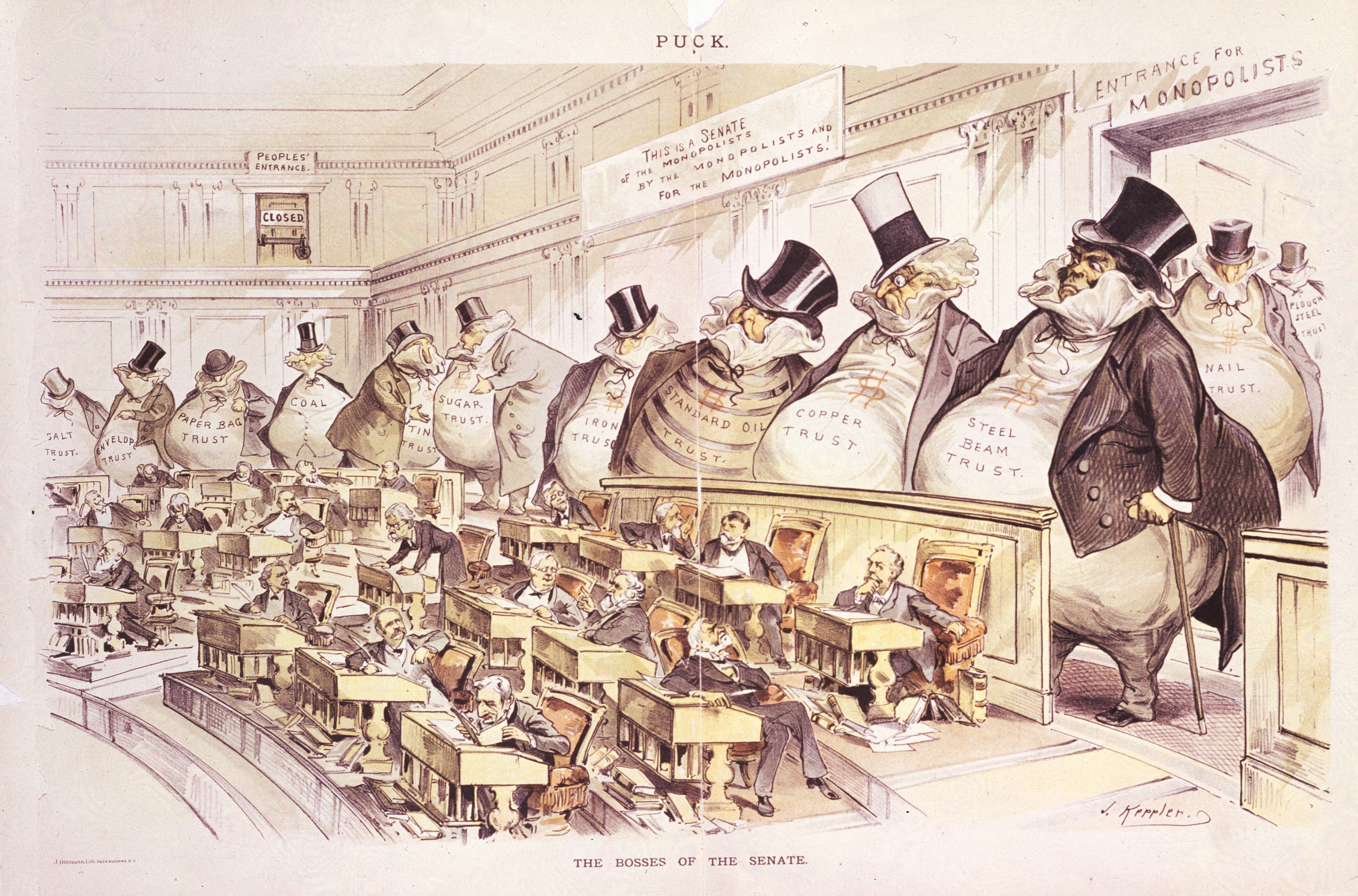
The economic stagnation that’s happening right now has gotten so pronounced that many economists and historians are referring to our current moment as the Second Gilded Age. The politics of that era have an eerie familiarity as well. In the late 19th century, the dominant faction of the Democratic Party called itself the “Bourbon Democrats.” They were pro-business, Wall Street-aligned, devoted to the gold standard and what they called “sound money,” and deeply hostile to any populist energy that threatened their donor relationships. Their avatar was Grover Cleveland — the only Democrat elected president between 1856 and 1912 — who used federal troops to break the 1894 Pullman Strike, revoked the Sherman Silver Purchase Act at the behest of the banking industry, and did precious little to stop the rampant corruption and exploitation that the era’s infamous Robber Barons enacted daily against employees and consumers. Instead of running on reform agendas in the face of the Crédit Mobilier and Whiskey Ring scandals, Democrats sat back and reaped the benefits of thermostatic public opinion and enabled criminals like William “Boss” Tweed’s Tammany Hall organization.
When William Jennings Bryan emerged from the populist wing of the party — barnstorming 18,000 miles by train, giving hundreds of speeches about economic fairness and the crushing weight of debt on ordinary Americans, terrifying the donor class with his “Cross of Gold” oratory — the Bourbon Democrats bolted. Traditional Democratic Party donors abandoned Bryan, preferring to lose while following Cleveland’s model than win with Bryan’s. Some even crossed over to support the Republicans in 1896.
William McKinley, the Republican who won the race that year, presents another striking Gilded Ages parallel. Like Donald Trump, McKinley was regarded as less than bright. Mark Twain once described McKinley thusly: “considering the unbulky size of his mind, it is odd that he has such difficulty in making it up.” Also like Trump, the 25th president was obsessed with levying tariff taxes on Americans, and for the same mistaken belief that doing so would create economic prosperity.
With the overwhelming majority of economists warning that tariffs cause inflation and domestic stagnation, Trump’s speechwriting team began peppering his 2024 campaign rhetoric with references to McKinley as a “Tariff King.” At his second inaugural address, Trump name-checked McKinley, completely unaware that his predecessor’s tariffs and other policies drastically increased economic inequality and led to economic stagnation, as Chris Lehmann at The Nation noted last year. On the first day of his current term, Trump honored his tariff hero by officially renaming Alaska’s tallest mountain from Denali to Mt. McKinley.
Trump isn’t the first recent Republican to lionize McKinley, however. Karl Rove, chief strategist to former president George W. Bush, was so enthralled with McKinley that he even wrote a 2015 book about how Republicans should copy his brand of faux-populism as a way of attracting ethnic minorities. It certainly worked in 2024.
After McKinley’s assassination in 1901, his successor Theodore Roosevelt actually tried to make good on his former boss’s words, using the presidency as what he called “a bully pulpit,” fighting monopolies, pushing consumer safety laws, protecting the environment, and speaking in common language directly to the American people about the problems of rapacious capitalism. The corporate Democrats simply could not compete until Woodrow Wilson forced the party to abandon the outdated and unjust Bourbon economic model. He also embraced the media that regular people loved.
Wilson’s 1912 “New Freedom” campaign message was the first to use motion picture film to reach voters — understanding that new media and a populist economic message were inseparable. His platform promised to free Americans from monopoly and concentrated economic power, and in office he delivered the Clayton Antitrust Act, the Federal Trade Commission, and a graduated federal income tax. He believed America needed drastic action to stop economic inequality, mobilized the country about it, and then passed the laws.1
FDR went further still in his embrace of new media and new policies as he sought to curb the economic and social depression that Republicans’ Smoot-Hawley tariffs had exacerbated. Realizing that he needed a way to communicate directly to a people caught in the depths of moral and economic despair, he began his famous fireside chat radio addresses, telling citizens in plain English about his ideas, why his right-wing opponents were lying about them, and trying to uplift their spirits. He fought constantly, everywhere, and made the case in terms ordinary people could understand and believe. No president from either party has achieved the kind of electoral dominance Roosevelt’s communication and policy strategy engendered.
When Democrats finally learned their lesson the first time, they didn’t just win elections. They ended the Gilded Age and built the strongest middle class in American history. They governed for a generation because they had earned it. People want leaders who will fight for them and explain what they are doing.
Wilson, the only former Confederate citizen to ever be elected U.S. president, was infamously racist, and he conjoined his risible racial views with his new media savvy by having a pro-Ku Klux Klan film, The Birth of a Nation, played at the first-ever indoor White House movie screening. After subsequent public uproar, he claimed not to have known the subject matter of the movie.