


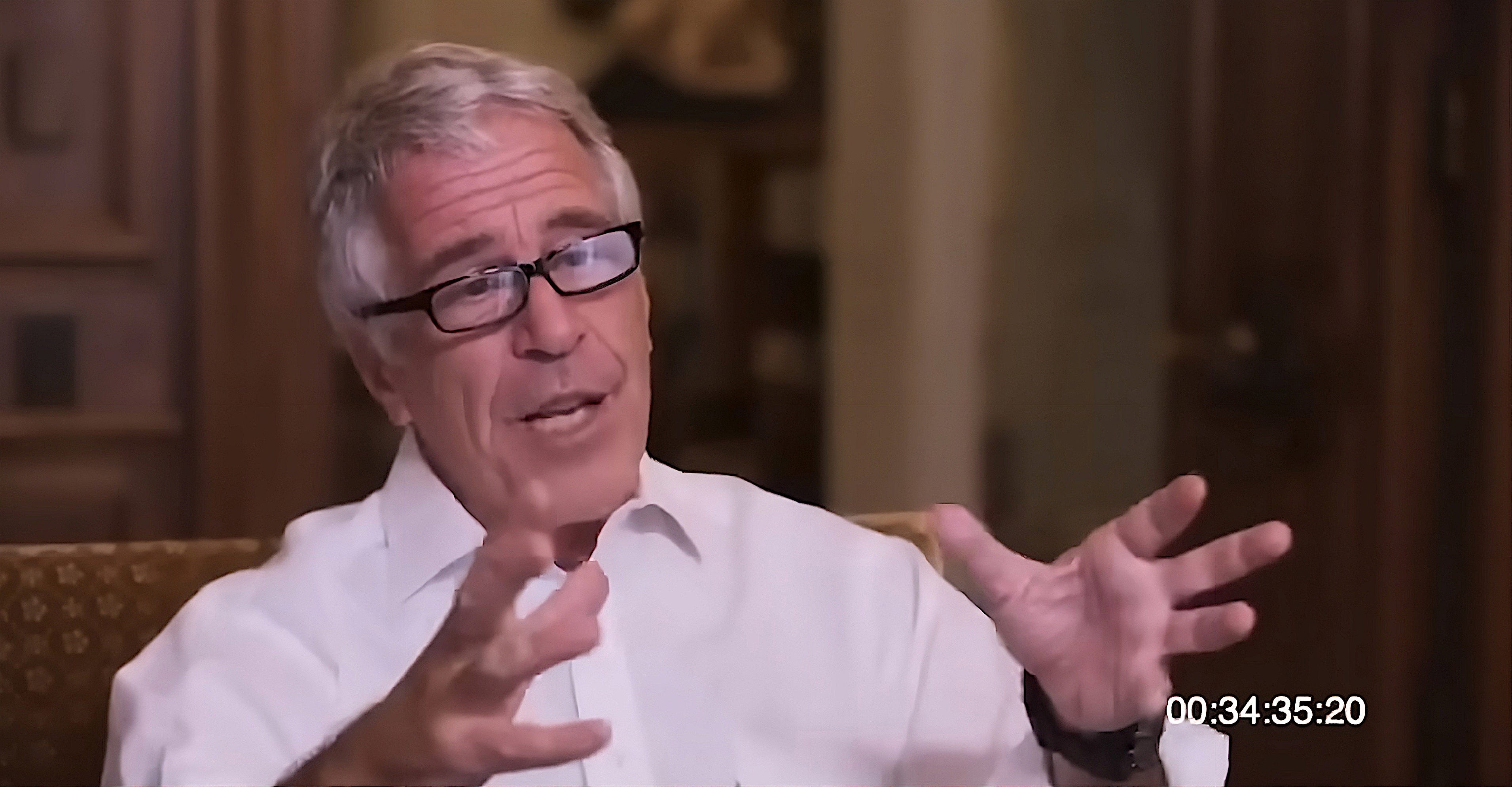
The life and crimes of Jeffrey Epstein were so complex that 5 years after his death, there is much about him that remains yet unknown. The system of sexual violence and exploitation that he devised is as infamous as it is uncovered. The financial structures he set up for himself were so complex that it takes hours to list them all, and his political and business connections were so vast and mysterious that to describe them in detail makes you sound like a conspiracy theorist.
But knowing and sharing the Epstein details is important because the late billionaire was part of a larger class of business oligarchs who have teamed up with each other against democracy, in the United States and around the world. Greg Olear, my guest for this episode, knows a lot about all of this. He has written the book on it, in fact, and it’s out now under the title, “Another Wonderful Secret,” which is a reference to a birthday greeting that Donald Trump sent to Epstein that has since become infamous. Greg is also the host of two podcasts, “Prevail” and “The Five 8.”
If you’re interested in supporting Theory of Change, we are doing a fundraising drive for the show and for Flux on GoFundMe. I’d really appreciate your support. You can also become a paid supporter on Patreon or on Substack. Thank you so much for your help. I cannot do this work without you.
The video of this conversation is available. Access the episode page to get the full transcript. You can subscribe to Theory of Change and other Flux podcasts on Apple Podcasts, Spotify, Amazon Podcasts, YouTube, Patreon, Substack, and elsewhere.
Audio Chapters
00:00 — Introduction
07:46 — Epstein’s early years as a teacher and then money manager
14:41 — Epstein and Robert Maxwell, father of Ghislaine Maxwell
21:02 — Epstein’s decades of close friendship with Donald Trump
24:51 — Sexual harrasment and abuse as social networking for the Epstein Class
30:46 — Epstein’s temporary fallout with Trump and 2016 reconciliation via Steve Bannon
35:30 — After his prison release, Epstein became much more reactionary
38:16 — The mystery surrounding Epstein’s death
40:36 — Joe Biden and Merrick Garland failed to expose the truth about Epstein’s crimes
46:28 — Conclusion
Related Content
Jeffrey Epstein became the hero of creepy right-wing men before he died
Newly released documents show that Jeffrey Epstein was obsessed with blocking women scientists
Covered-up abuse in far-right Christian churches and the origins of Pizzagate and QAnon
Jeffrey Epstein and the crisis of elite impunity
Secular post-libertarianism and the Epstein class
Science fiction and the reactionary mind
Audio Transcript
The following is a machine-generated transcript of the audio that has not been proofed. It is provided for convenience purposes only.
MATTHEW SHEFFIELD: And joining me now is Greg Olear. Hey, Greg. Welcome to Theory of Change.
OLEAR: Hey, thanks so much for having me. Good to see you.
SHEFFIELD: Yeah, it’s [00:03:00] good to do our first collaboration together. Hopefully one of many more in the future. Okay, so the book that you’ve got here that we’re talking about today it’s within your, general ambit of trying to show context for news stories that people know about and give them the bigger picture. Is that right?
OLEAR: Yeah, that’s right. Basically the way that I see it is the media is very good at telling you what happened that day, what is new. It’s called news for a reason, because it’s new, right? But once they tell you the one thing, they move on, and it’s especially true now when, the internet makes it—at least 50 years ago, you had to pause and take a breath and wait for the evening edition to come out. Now it’s this constant 24/7 barrage of news and they do a very good job covering the news. They-- What they don’t do a good job of is putting the news together and showing and explaining how one story relates to another.
And so for the last, like, I don’t know, [00:04:00] nine years now, that’s what I’ve been trying to do. I’ve been trying to provide just a, more big picture look at some of the big stories involving, My first book was Trump and Russia involving Brett Kavanaugh, involving Leonard Leo, who’s the the, the Supreme Court whisperer that put all the people on the Supreme Court and has all this money.
And now the Jeffrey Epstein story is so complicated and so, tentacled that it sounds, even writing the book, it sounds like something that, it, is from a, not even a movie, because a movie’s not enough time. This is like a seven, seven-season series on HBO or something.
It just keeps going and getting crazier and crazier. And the longer it goes on and the more we learn, the harder it is to remember all the stuff that happened before and to keep everything kind of in your head in context. So I wanted to do that and I wanted to kind of explain to everybody what I knew, because people were asking me in my, my real day life, like, “What do you think about [00:05:00] Epstein?
What’s going on?” And there’s so much going on that I just wrote a book about it. And the book is, it’s written in the form of a a Q&A. So it’s, the subtitle i- is Infrequently Asked Questions About Jeffrey Epstein. And I find that’s a good format for me to write it, but also f- I think for people to read it, because it seems to be more engaging, and once you get going, you just kind of go, and by the end of it, hopefully you have a better idea of what we know, what we don’t know, what we’re waiting to know, and that’s the whole point of what I’m trying to do.
SHEFFIELD: Mm-hmm. Yeah. Well, and I guess the other thing also about Epstein that is important, and, we’ll get to the details of some of what you’re d- you’re saying here in a second. But, the other thing about Epstein and, why this story matters more than just, as a generic crime story or, in his particular connections to, specific political figures like Donald Trump, is that [00:06:00] because of the, extensive public disclosure of the documents of-- that he, ac- accrued over the years, this guy, obviously he was a sex criminal, so, like, that m- is something that perhaps demarcates him from, the other people.
But, like, there is a reason that there is this phrase, the Epstein class. It’s not just a, referring to the sex crimes. It’s referring to people who manipulate the financial and the political and the organizational systems across parties, across nations, for their own benefit and to the detriment of larger society
OLEAR: Yeah. I think, and that’s a good point because whenever somebody’s picture appears and Epstein’s in a photo with somebody, or Ghislaine Maxwell even more so, because she made a point to get her picture taken with as many people as possible. Just because someone is in a picture with Ghislaine Maxwell only means that they were in the same place with Ghislaine Maxwell once.
Doesn’t mean anything. [00:07:00] And I think to your point, most, many if not most of the people involved in the Epstein class and even involved with Epstein had nothing to do with sex trafficking. It’s a, I think it’s a small percentage of the people that shared that, that disgusting predilection that he had, and as you say, made him unique in this world.
And what my book is about is not the sex crimes as much as everything else, which is, getting at really the center of power. Who has power? Who has money? Who has influence? and how, can we understand it to make it better and make everything more democratic in the United States and, in the world?
SHEFFIELD: Yeah. Well, sounds like a great a great idea there. So all right.
Epstein’s early years as a teacher and then money manager
SHEFFIELD: so let’s maybe start though, like, where did this guy come from? I think a lot of people, they, know about his crimes and his c- connections but his early, his origin story often is not as widely known, I think
OLEAR: Yeah. Well, he, I [00:08:00] mean, the one... We’ll start at the beginning. He’s born in, New York City in Queens, and he spends, like, one semester at Cooper Union, which is a very good university, by the way. Sometimes now I think the revisionist history is to say, “Well, Epstein was stupid and he was dumb, and he was a...”
He wasn’t stupid and he wasn’t dumb, and he was very charming. He just, that’s, he was clearly a charismatic, charming guy, and I think he was very, good, especially at getting older, powerful, particularly men, but women too, to like him and to trust him, and he was good at ingratiating himself into these the halls of these, powerful people.
So he started working at the Dalton School, which is this very prestigious sch- private school in New York City. He wasn’t there very long. He there, a lot has been made that Bill Barr’s father was the headmaster at that school. We’re not, we still don’t know for sure if, Donald Barr actually hired Epstein or not, because Barr left in the spring and Epstein came the following fall, so they were never [00:09:00] actually at the school together at the same time.
I personally, I think that is a little bit overblown and over-reported on, but, we’ll, see. I may be wrong about it.
SHEFFIELD: Well, and even if it’s true, like, does it really matter?
OLEAR: Well,
SHEFFIELD: much does it matter?
OLEAR: It doesn’t. So at the school, he meets all these people and he winds up meeting Ace Greenberg, who is the the head of Bear Stearns. Super powerful Wall Street guy.
Ace Greenberg thinks he’s terrific, so he goes to work for Bear Stearns and he winds up doing the job that is basically tax avoidance. He’s good at offshores. He’s good at figuring out how to hide the, rich people’s money, and that’s what he’s doing at Bear Stearns. And it’s weird because he jumps up from the ranks.
Like, he had a very high-powered job pretty quickly and kind of leapfrogged over other people. And there was, even at the time, and this is in the late ‘70s, early ‘80s, even then there was some like, “Who’s this guy? What’s the deal with him and Ace Greenberg?” And I don’t know the answer to that, except that the pattern with [00:10:00] Epstein is that he’s very good, as I said, of, making these older men trust him and want to teach him things.
And that’s how it was with Greenberg. He got in trouble at Bear Stearns with the SEC because of some filing requirement. He got mad at the SEC and left, but didn’t actually leave. It was kind of complicated He winds up going to London. He had a girlfriend named Paula Hale Fisher who he went to London with, and while there he met a guy named Nick Lees, who’s about around his own age, and Nick Lees’s father Doug Lees, Douglas Lees, who lived on-- They were in London, but they also had a house in the country, and they were kind of wealthy, and Doug Lees was, that’s a name probably most people don’t know, and I think in this whole story, he may well be the most important person to know, and he’s the one that’s talked about the least. He’s British, he’s an arms dealer. There’s very little about him online. I write in the book that there’s literally more pi-pictures online of J.D.
Salinger than of [00:11:00] him. So he’s reclusive. He was definitely an arms dealer. We can’t say for sure if he worked for MI6 because people at MI6 aren’t allowed to say that they worked for MI6, but he almost certainly did because he was negotiating an arms deal called Al Yamamah between the British government and Saudi Arabia.
And this is around the, like, mid-’80s time when, right around Iran-Contra, with the sort of heyday of these, like, rogue arms dealer types. So you have, like, Adnan Khashoggi was somebody that, that he knew and Lees was doing business with. So Epstein is kind of, as I understand it, Lees’ right-hand man.
And in the Times of London, there was a story about it where they say he was-- Lees mentored him. That’s the word that they use. So there’s lots of speculation about whether or not he was, had ties to intelligence. And I think Todd Blanche even said, “There’s no tie. There’s no evidence that suggests that.”
I can’t remember if it was Blanche or Patel. And it’s like, he worked for a guy f- that worked f-for MI6. What are you talking about? So [00:12:00] in, in those arms deals he was working for through this MI6, he was working with Saudi intelligence, clearly. Remember, he had a passp- he had a Saudi passport that they found when they searched his apartment from around this time period, showing that he came here, he went there, and kind of, he was in the same places at the same time based on the passport stamps that all this stuff was going down.
And the person in charge of Israeli military intelligence at this time, who he was also dealing with because they were involved, Israel was involved with Iran-Contra, and every- It’s a s- It’s a small club of people that do these big arms deal things, and he was, part of that group. The person in charge of Israeli military intelligence was Ehud Barak.
And we often hear, “Oh, Ehud Barak, the former prime minister,” and we know he has ties to Epstein. He’s visiting Epstein’s house, blah, blah, blah. But he was also the head of a major intelligence unit in Israel. So the idea that Epstein isn’t connected to intelligence is just, it’s just, it’s not right.
It’s just flat out [00:13:00] untrue. So Lees kind of I think hooks him into this world, this sort of secretive world. And Epstein has the skill set where he can hide money. He’s good at moving large amounts of money around and have it not be detected, which is a very useful skill set when you’re doing these arms deals that you don’t want people to find out the details about.
SHEFFIELD: Yeah, for sure.
OLEAR: So that’s, kind of the origin story. He comes out of this in the, mid, late ‘80s. He’s made a lot of money, and he and Lees have a falling out where he stops working for him because apparently the, official story is that Epstein has charged Concorde jet flights and five-star hotels to the business expenses, and Lees didn’t like that and fired him, and who knows what really happened.
But then he goes to work for a guy named Steven Hoffenberg whose name you, hear a lot in connection with the survivors because he ran a Ponzi scheme called Towers Financial. This is around the, late ‘80s. And Epstein, according to Hoffenberg, was the [00:14:00] basically the chief operating officer of the Ponzi scheme.
But Epstein didn’t go to prison, didn’t get charged. Hoffenberg wound up taking the fall. He spent, I think, 18 years in prison, and when he came out, was so shocked and appalled by what Epstein had done with the survivors that he, kind of dedicated his time and the rest of his life to working on that, to his, to his credit, and trying to expose what happened.
So this is a crazy-- He’s a teacher. He’s working in offshores. He’s working for arms dealers and intelligence people. He has a brief foray into a sideline career where he’s finding money that’s lost for, like, dictators and people like that. And then he’s working at doing this Ponzi scheme.
Epstein and Robert Maxwell, father of Ghislaine Maxwell
OLEAR: And then at some point after that’s when he starts hooking up with Les Wexner, and we enter into the Trump phase of things where everybody kind of, associates him with. But he’s been doing this for years, and he knows really powerful, rich people and has for [00:15:00] decades. Including, by the way Robert Maxwell and Ghislaine Maxwell, because the idea that Ghislaine Maxwell and, Epstein met each other for the first time after Robert Maxwell died is almost certainly not true.
it’s a narrative that they put in the media, but even if you go look in the birthday book, one of the guys who wrote in the birthday book references Ghislaine Maxwell having, been at, Bear Stearns in, like, 1979. So, and, oh, the teenage daughter of Robert Maxwell or Bob Max, whatever he wrote. Robert Maxwell is Ghislaine Maxwell’s father. He died in November of 1991 when he fell off or was pushed off his yacht which happens, I guess.
but before that, he was pretty old and he was right on the brink of, his entire financial empire crashing because he had been embezzling money from the pensions of all of his employees. He ran the Mirror newspapers in Britain. But going way
SHEFFIELD: a bunch of other newspapers
OLEAR: Yes, huge, umbrella thing. But [00:16:00] going way back into the war, he’s born in Czech, what was then Czechoslovakia.
He winds up, kind of working for British intelligence during the Second World War in, interrogating people at the camps because he spoke different languages. And after the war is kind of, he sets up these publishing companies. But he is basically like Epstein. They’re, similar in that they’re, he’s a person who’s at the nexus of a lot of different power centers, right?
If you’re, if you are an arms dealer or let’s, reverse it. If you are a, member of the British royal family and you want to talk to an arms dealer, you don’t pick up the phone and call the arms dealer. You call Robert Maxwell, and Robert Maxwell talks to the arms dealer. Th- there has to be these middlemen, these, th- these conduits,
SHEFFIELD: Wheel greasers.
OLEAR: Exactly. That’s what he was. And he did a lot of other things. He also kind of later in the game went into business with Semion Mogilevich, who at the time was the head of the Russian mafia, [00:17:00] of which we’ve heard so much, and was his business partner. This is all per, there’s a great book called “Israel’s Super Spy: Robert Maxwell,” that came out in, I don’t know, even before my first novel was out.
So that’s a really interesting book for anybody interested in learning more about him. So he’s in there and he knows all these people. Robert Maxwell is, has ties to the KGB, really deep ties to the KGB. He has ties to-
SHEFFIELD: he also, yeah, like, was a somebody who made his publications aligned with the left-wing political parties. I think we, we do have to say that.
OLEAR: he, did that, but also he ran the science press. Like a lot of his-- I forget the name of the company that he ran. All of the scientific journals were published by that press. So it was a way of kind of controlling the knowledge base after the Second World War. when we’re still in the time of the nuclear weapons and all this stuff.
He kind of had a, handle on that and a, network out to these, like, r- [00:18:00] smart physicists and scientists and tech people, which Epstein also did. That was a whole sideline of things that Epstein did that doesn’t get talked about quite as much. So but yes, he-- And “The Mirror” is a left-wing, left-leaning place.
Robert Maxwell was nominally, if he was in the United States, he would’ve been a Democrat, as opposed to Rupert Murdoch, who was the same age, but clearly not a Democrat. But he also... Yeah, no, they were rivals. They didn’t like each other. Yeah. But Maxwell had a basically a prostitution thing going on in Bulgaria while it was still closed off, and there’s some speculation that when Ghislaine and Jeffrey hooked up in 1991, early 1992, that’s when Epstein started up with all the sex trafficking stuff.
Like Ghislaine is potentially the one who brought that in because there’s really not much evidence at all of Epstein doing this before they got together. In fact, Epstein had girlfriends [00:19:00] who were his own age up until the time that he met Ghislaine. So, yeah. So that’s
SHEFFIELD: An interesting detail. Yeah, I didn’t know that. And, like, just as a media angle to this regarding Maxwell and, his papers it’s not a practice that exists within the United States, but in Europe, especially in the UK, but not just there a lot of the tabloid down-market newspapers for decades have always had a feature, a daily feature of a topless woman, like as a beauty contest.
Like a, par- partially nude woman. Like, they were printing pornography in the newspaper. And I’m not going to say it was all, that they were all exploited, but, it was not the way that porn works now where the creators are in control of everything now.
It was, women who just wanted, 100 bucks. And so they’re, and so they were like, “Oh, well, I can get a, 200 bucks if I show up here and take my dress off.” And that’s, a pretty could be a way of, [00:20:00] getting people that are hard up for money and that’s looks like how some of these people might have gotten started with all that.
OLEAR: Yeah, no, it and Epstein was very good, obviously, and Ghislaine at finding people that were hard up and that had the personality type that they thought they could influence and all of that. Yeah, for sure. Maxwell, t- horrible person. Just a horrible, man. But there’s also, there, there’s this question that people often ask is, “Who is Epstein working for?
He’s working for the Israelis. He’s working for the Russians. He’s working for the...” Epstein was working for Epstein, just like Robert Maxwell was working for Robert Maxwell. They didn’t care about anything other, I think, about any- anyone other than themselves and their own ability to live life and to be, connected to power in the way that they were.
And, I think they liked the idea that they could call the head of the KGB and John Tower and, get the PROMIS software sold. Robert Maxwell was selling the PROMIS software. that’s a whole other ball of wax, but only tangentially [00:21:00] related to Epstein. But yeah.
Epstein’s decades of close friendship with Donald Trump
SHEFFIELD: Okay. And then in the middle of his rise to riches is when Epstein came into contact with Donald Trump, who eventually became one of his closest friends because, like recognizes like. So tell us about their, friendship
OLEAR: I think it just starts, they, they’re in the same kind of social circles. He knew y- they have a lot of friends in common, Ace Greenberg, Adnan Khashoggi, Robert Maxwell, who, you know, who knew Trump pretty well. And it, I think Ghislaine is, the one that sort of brought them all together.
And it’s like any f- I think any friendship, it developed over time. They both were in the same part of New York City. They both liked to do the same things. They both liked to be around, young pretty women. They were both, had problems with that. They both had places in, Palm Beach, in Florida, and I think it just [00:22:00] blossomed from there.
Where they were to- and they were together a lot, and they were together i- in party situations. They were together, they’re, he’s on the plane. I don’t know, it, there’s a lot of
SHEFFIELD: in Florida too.
OLEAR: Yes. Yeah. because they’re just in each other’s orbit all the time. And you go back and look and, and Melania is in on this too.
Like, this is the, time that Trump starts really hanging around with Epstein is also the time that he’s, he’s with Melania. He’s starting up with Melania, and she’s right there. I’m not saying she’s doing anything, but she’s certainly present in rooms where Epstein is, where Ghislaine is, and she, she was his girlfriend and wife.
Like, she knew all these people. and you can see it in the photos. The most famous picture of Trump and Epstein, Melania’s right in between them, so, so I think it just sort of blossomed over time. And as you say, like l- like recognizes like. And what these guys were into is not something I think that most people are.
And once you-- I would imagine [00:23:00] that, once you’re that kind of criminal and you f- figure out that your buddy also likes the same kind of thing and is willing to take the same kind of risks that you’re willing to take everything just gets, ginned up and, pushed to the limits.
Trump has always been a person who doesn’t face consequences for his actions. This is the main problem w-we have with him. For his, pretty much his entire life, any time something has gone wrong, he’s either declared bankruptcy or his daddy came and buy him out, or whatever it is. You know that song “Lawyers, Guns, and Money” by Warren...
yeah. it’s, send lawyers, guns, and money. Dad, get me out of this. That was Trump for basically until Fred died, and after that, he was surrounded by people that he got to do, his bidding, whether it’s Roy Cohn or whoever.
SHEFFIELD: Got bailed out by NBC when it,
OLEAR: Yes,
SHEFFIELD: hit rock bottom and he would’ve had to declare personal bankruptcy.
OLEAR: Right. Right. And
SHEFFIELD: gave him the lifeline
OLEAR: Yeah. And God knows what Deutsche Bank and the Russians and who [00:24:00] knows?
Well, we may never know any of that stuff. But he’s, in that world too. And eh, supposedly Trump and Epstein had a falling out around the purchase of that property in Florida, which they both wanted and Trump wound up getting, and then he flipped it to the Russian guy for like three times the value like a year later.
The property that they were both trying to buy in Florida was originally owned by Les Wexner, by the way, which I-- which is interesting because Epstein obviously wound up moving into what was called the Wexner house on the Upper East Side of of Manhattan. So it’s just these worlds are small.
That’s one thing that I’ve, kind of taken from it. It’s like there’s not that many people, h- how many arms dealers are there? I don’t know. But i- at that level, there’s not that many. So it’s, it’s-- I
SHEFFIELD: not out there putting up a billboard
OLEAR: Right. Right. You gotta know where to find them, yeah. All of that stuff.
So, yeah
Sexual harrasment and abuse as social networking for the Epstein Class
SHEFFIELD: and this, recognition o- of mutual evilness, frankly it, [00:25:00] does kind of also fit within the, rise of Epstein, I would say, as well. and it, goes to the title of your book, “Another Wonderful Secret,” which, well, I want to talk about the specifics of that in a second.
But first, I, There is undoubtedly, and, we saw this really during the when Me Too stories were just coming out, so much, is that abusing women or mocking them or exploiting them, this is actually a form of networking for some men who are, disgusting individuals. Like, it-- Once they see that there’s another guy who does that it is, it’s another wonderful secret between them.
And so it-- they become fast friends over their mutual loathing and exploitation of women. and I think that played a big role in Epstein’s rise, in addition to his other connections.
OLEAR: I think you’re, I think you’re right. Brooke, Harrington, who I’ve had on my show, who wrote the... she’s an expert in all the offshore stuff. [00:26:00] She calls it the, Depravity Olympics the Competitive Depravity Olympics, where, these guys are literally trying to outdo each other by what shit they can get away with and how bad it can get.
And, to your point, I think you’re right that, they’re just trying to one-up each other. And that’s really, that’s the other reason that I wrote the book is Trump is-- I think we can agree, reasonable people can agree, Trump is clearly trying to cover something up for, in the Epstein files.
He clearly does not want the files out, which is why even Pam Bondi’s ability to get rid of it wasn’t good enough for him, and he had to put Todd Blanche in there to really make it all go away. And the question is, so what is it that he’s hiding? what can, it possibly be that’s so bad that he, who’s done all these horrible things, he’s 80 years old, he’s behaved horribly for 80 years, he’s broken God knows how many laws.
Y- we know he’s, he lost the E. Jean Carroll thing. He’s, we can say, he, lost the sexual assault/rape thing. Yeah, we, know [00:27:00] this is all true. He was convicted o- on 34 counts in New York City. We know that this is true. Jack Smith and the documents case, he ha- he thinks he has a dead to rights case that, that was shut down.
That seems to be true. We know all of this. And even I think people on some intuitive level know that he almost certainly raped underage girls. that seems to be a thing, that nobody’s like, “Oh my God, I can’t imagine Trump would ever do that.” Everyone just sort of says, “Yeah, well,” So I don’t know that even that is bad enough for the people that like him to turn on him.
So what is it? What i- what can it possibly be? Because I don’t think it’s about sex, I think it’s about money or worse. And we may never know. We may never know
SHEFFIELD: Yeah. And it might be about his friends also. I mean, not necessarily be about him. It may be about him covering up the crimes of other people that are anything, a lot worse than anything
OLEAR: so cute that you think he has friends. That’s nice.
SHEFFIELD: Well, true. Okay. fair,
OLEAR: I know what you, I know what you [00:28:00] mean. I know what you mean. Yeah. Yeah.
SHEFFIELD: yeah. And so, okay, so but specifically though, the just for people may have forgotten or there’s so much news f- flying fast and thick nowadays so the...
Another wonderful secret. what’s the, what does that mean?
OLEAR: Okay,
SHEFFIELD: this context?
OLEAR: The Wall Street Journal broke the story some months ago. I’ve, I, can’t, I no longer have any track of time. I don’t know if you have this problem, but I feel like we’re living in this weird time loop. But some months ago, the Wall Street Journal broke the story of the birthday book, which was something that Ghislaine Maxwell put together for Jeffrey Epstein to celebrate his 50th birthday, which was in 2003.
So she had all these people write letters and send photos and all this stuff, and she put this book together. Which if they were normal people, you would say, “That’s really quite lovely that she did that.” it’s almost something that a old married couple would do, so Donald Trump sends in this weird fake dialogue thing typed out over the, silhouette of what [00:29:00] appears to be a girl, not a woman.
And the last line in his little thing is, “Let’s let every day be another wonderful secret.” And then he signs it in that horrible scrawl he has, which looks, in this design, like pubic hair. And I think, y- he denies it and all. It’s clearly him. I mean, why would he-- why would someone forge that in 2003 because they knew he was going to be president someday?
Like, it, that, that seems preposterous. Although, it’s actually kind of creative to do the, signature where the pubic hair should be. And I think the best defense for him would be, “I’m not creative enough to come up with that.” But he... So he did this thing. We don’t know what another wonderful secret is.
He uses the word enigma in his note. That’s not a very Trumpy word. And people have speculated that was a code word because it’s an anagram of gamine, G-A-M-I-N-E, which is, like, a young girl. That’s just a theory that people have and that, that was kind of their [00:30:00] ha ho, Look at what we’re getting away with. And we know that it’s true of Epstein. And I’ve said, this is another thing that I’ve said many times. Like, right now, the best thing that we can say about Trump, the best thing, the best way to read what we know, is that for two decades or so, he was really, good friends with the two most notorious sex traffickers in recent memory, hung out with them a lot, and allowed them to use Mar-a-Lago to recruit girls for them to rape.
That’s the best spin that we can put on what Trump is and what he knew. That should be disqualifying, I think, but it’s not, clearly. So, I don’t know
Epstein’s temporary fallout with Trump and 2016 reconciliation via Steve Bannon
SHEFFIELD: And so it is true that, it, Tr- Epstein was anti-Trump for a, little while. But once Trump won, he threw all of that [00:31:00] away. And he actually reconciled with Trump. And this is something that isn’t widely known actually.
And and I actually had to, go into the jmail.world website, which is a fantastic resource
OLEAR: It’s so good. I lo- whoever did it...
SHEFFIELD: the Epstein emails. But there, there’s a, so there’s a, an email that he was sending to this guy a- named Boris Nikolic in December of 2016. And it’s interesting. So Jeffrey Epstein emailed ... So they’re having a, back-and-forth discussion about, their year-end plans, what they’re doing, ar- around the end of the year. And Epstein tells Nikolic what he’s doing, and I’m going to quote directly from what Epstein in his very illiterate prose says.
I’m going to quote this verbatim. He says, December 26, 2016, 1:15 AM, quote, “Fourth, I’m in [00:32:00] Palm with all the Trump boys. Fun.” So he was hanging out, according to him, in this private unmonitored email, which he would have no reason to lie. Like, why would you lie about that? Saying that he spent basically New Year’s with the Trump boys. So he was definitely in with Trump. And this was also around the time that he had gotten in thick with Trump’s top advisor at that time, Steve Bannon.
T-talk, talk about that and his associations with Bannon, and we don’t even know right now fully what they did together and all that footage has never been released.
OLEAR: It’s very strange, and I should preface this by saying Bannon, to me, is one of the more inscrutable characters in this whole thing. I-- because he’s clearly a smart guy, and he also clearly knows that he’s bullshitting, I think. [00:33:00] Like I-- you can tell, like he
SHEFFIELD: Oh, he collects sociopaths. Like, that’s what Bannon does. He finds people who are criminals and he says, “I love you. Give me money.” And that’s what he did with Epstein, I think
OLEAR: I think so. that’s actually a very-- Thank you, because that’s a good way of, looking at it. But and you could tell he doesn’t... I don’t know. I-- My sense is the stuff he’s saying, I don’t think he believes it. I think he just says stuff that he thinks is going to be incendiary or help his cause. I think that he and Epstein at that point were both a little bit on the outs with Trump, and I think there’s an email in there where they’re saying, I forget which one of them wrote it, like, “Oh, if he knew we were hanging out together, he’d be mad.”
It was something like that. Like something middle school girls would say at, in the cafeteria, “ oh my
SHEFFIELD: I think it was like right before he went to jail, I think. Because he, yeah, because like, yeah, Bannon had been thrown out at that time. So this was after Trump or Epstein had spent New Year’s with the Trump boys. So like that’s what he was upset or he thought Trump would be angry that he was hanging out with, [00:34:00] Bannon.
But go ahead.
OLEAR: Yeah. And then Bannon apparently made this documentary or was working on a documentary which we still have only seen the trailer of. The trailer, last time I checked, is still on YouTube. And it’s, you can tell kind of what he’s doing. Remember, Bannon is from Hollywood. He comes from LA, like he, he has somewhat of a film background, so he does understand that world more than, I don’t know, other th- there’s a lot of very artless people in MAGA, but he seems to get it with that.
And, so Epstein, he has like a beard, he’s got the glasses, he looks like kind of professorial. He’s got books behind him, which I’ve never seen Epstein actually read a book or heard of him reading a book ever. But and you can tell he’s trying to do this thing where he’s softening the image and all this kind of stuff.
But for what purpose? I don’t know. Is he really th- does he really think he’s going to rehabilitate this monster? Maybe. I mean, maybe, Bannon just looked at it like a challenge. Maybe he [00:35:00] looked at it
SHEFFIELD: wanted the money.
OLEAR: That is also true. that’s b- you’re, probably right, actually. And the power and the halls of power and the Rolodex and of that kind of stuff.
SHEFFIELD: It doesn’t matter if it works. It just matters that he gets the access and the money. Like for Bannon, that’s the on- that’s the top objectives. Other stuff? Sure, yeah, he’ll take it.
OLEAR: Mm-hmm. Yeah. I think that’s the critical thing. So who knows? But that’s-- I think there’s a lot there that we don’t know yet, and we may, we may never know. Who knows?
After his prison release, Epstein became much more reactionary
SHEFFIELD: Yeah. Well, and, so this was also after he had, been in prison the first time. And so after he came out, and especially when Me Too began Jeffrey Epstein basically became like the, central node of a social network for predators, essentially. And, because he, was, And you can see this in all the, in the emails.
Like, he was deluged with creeps [00:36:00] emailing him saying one of, one of two things: “How do I get with this woman who is, half my age and could be my granddaughter?” Or “How do I stop people from getting mad at me for harassing women?” Like he’s just have, like that’s so many of the emails in addition to all of his, financial, bullshit.
And, he... And you can see it, that he became, I think, a lot more... He was always obviously, against spreading, sharing the wealth, if you will. but he became much more right-wing, during that time after he got out of prison, I think, and really slotted into this, literally with Peter Thiel.
He became investment partners with him. And there is this, a- again, and, it sounds like a conspiracy theory if you tell people that there actually are these, globalist billionaires who work [00:37:00] together to destroy democracy and steal money from the government and commit sex crimes. Some of them.
Like, if you say that, that sounds like a conspiracy theory, but it’s actually true.
OLEAR: It’s very true. It’s, it’s-- Yeah, it’s just demonstrably that is what is happening and, it probably has always happened to some degree. Yeah, and they’re all, there’s some- that, that sociopathy is something that they all have in common, and I think to be a billionaire like that and to be fueled in that way, you have to have somewhat of a sociopathic, misanthropic tendencies because I don’t know, like Jeff Bezos, for example, is worth God knows how much money.
Like why can’t you pay your people a little bit more so they don’t have to go on food st- like what’s wrong with you that you wouldn’t do that? But he just, I guess, doesn’t care as long as he can have his wedding in Venice and the, And Bezos is actually one of the relative to some of the other oligarchs, isn’t so [00:38:00] bad.
At least he created a, web service that people use and like,
SHEFFIELD: and isn’t trying to steal money from dying children in Africa
OLEAR: Mm-hmm. Right. Right. Or out or kill them. Yes. Yes. Mm-hmm.
The mystery surrounding Epstein’s death
SHEFFIELD: yeah. Okay. Well, so, and, so that’s, that takes us up then to the the, final moments of his life which still remain shrouded in mystery, unfortunately. So let’s let’s talk about that
OLEAR: I have no take on it one way or the other. I mean, I kind of, because of what I tend to write about, I’m very, sensitive about being perceived as conspiratorial. So whenever something seems like catnip for conspiracy theory, I tend to stay away from it. And the at first, I should say, the whole, like, who killed him?
Was he murdered? Was it a suicide? All of that, [00:39:00] I, I-- it just struck me as one of those things that, that you could go down that rabbit hole and get off the, it, takes you away from the money, which is more important. But now, stuff has come out that makes it... I mean, I don’t... Did he really kill himself?
When I first heard about it, I thought, “I would kill myself if I was him.” I wouldn’t want to be alive anymore after that. You’re just going to be in prison and it’s, you’re, screwed, Somebody’s going to come kill me eventually anyway. I might as well do it myself and then I can control it or whatever.
Smuggling something in, controlling the cameras and all that. There’s all these theories about who might have done it. But the person who could more efficiently than anyone have controlled the, the guards at the jail and what they saw and what they didn’t saw is the guy that was there, which is Epstein, who had money, who had funds, and all this stuff.
So initially, I was just like, “All right, he killed himself, whatever. I’m, glad he’s dead.” That’s, how he died isn’t really [00:40:00] all that interesting. But I think now, if he was murdered and there is some sort of cover-up, and there is evidence to suggest this. there was that Reddit post by the guard about people coming the night before.
I saw a, video of somebody who’s a mortician explaining about the pictures of the body. There’s all these things, but I don’t know about it, and I, What I would say would only be speculative, but I will say it’s we- it’s, weird. Like everything else about the guy, it’s weird. He died as he lived, in, in shrouded in secrecy and weirdness.
Yeah, I don’t know. What do you
Joe Biden and Merrick Garland failed to expose the truth about Epstein’s crimes
SHEFFIELD: Yeah, well, and, the government, I mean, there, there really should be, in my opinion a definitive, unlimited access report about what happened to the guy, and nobody’s made it. Like, and, this was, like, the Biden administration, they dropped the ball in a lot of ways.
They, should have made that, and they should have released the files. Like, that’s-- They should have done these things, and I mean, like, [00:41:00] Trump he didn’t say it as much himself personally. He was very careful actually to avoid... Like, a lot of people claim that Trump said he would release the Epstein files.
No, he didn’t. His people said that be- who were not in the know that he, wanted to protect whatever is i-in this information. They’re the ones that said that. And so, but that detail aside that’s, There, there’s such a continuing series, and this is again part of the bigger picture here, that the Democratic Party doesn’t understand politics and doesn’t understand media.
Like, they think, “Well, if the institutions say a thing, then it’s over. We don’t have to worry about it. The public will accept it and, we don’t have to think about it anymore.” And that’s never how things have been, number one but especially in the age of the internet, where any asshole like me with a microphone can get on get on and say what they think.
And, you got somebody who is [00:42:00] so infamous, so evil that... And did so many terrible things and there’s so much mystery about whatever it is that he did. You’ve gotta, you have to step up to the plate. And, it’s good to see now that there are some Democrats like Robert Garcia and, a bunch of the other ones who actually are trying to get to the bottom of things and, have real transparency about this.
But the Biden administration should have done this job. This, these guys shouldn’t have to be doing cleanup on this.
OLEAR: No we, can go through and discuss the many, ways that the various Democratic administrations have screwed this up by handing Trump more and more power and not using every lever at their disposal, every arrow in the proverbial quiver to stop it from happening. Starting with Obama after the initial election when there was all the Russian stuff and he just could have named a, special prosecutor immediately and instead he went windsurfing and just, was like, “I’m out,” and sort of abrogated the, [00:43:00] leadership role that I think a lot of people were looking for in that moment.
And, Merrick Garland is, a, just a catastrophic error on the part of Biden. I mean, just a useless person to your point, just so consumed with norms in the Justice Department and it’s like, dude, if you don’t go after these people, they’re going to get back into power and they’re going to chop this whole thing down, which is what’s happening.
And which is something that, I wrote about in my book before the election, and I’m hardly the only one who knew what they were going to do. You knew what they were going to do. this is not, it’s not rocket science. When Kash Patel goes on podcasts and says they’re going to, they’re going to use retribution to go after the enemies and all of this, what he means by that is that’s what they’re going to do, and you have
SHEFFIELD: It’s not a joke. Like, this is fucking serious
OLEAR: Exactly. Exactly. And, the Epstein files being released would’ve been a really good way to, nullify his campaign, Trump’s or, even if after he won [00:44:00] to stop it in the, in, nip it in the bud, so to speak, but no, they just, there’s no, It-- A- and the Democratic leadership, Schumer and, Jeffries are even worse.
I mean, they’re just, they seem to not be aware that it’s no longer 1996. I don’t know what’s going on with those guys, but it’s not working to such a degree that it makes you wonder if they’re just in on the whole thing and there’s just controlled o- If they were a controlled opposition, they wouldn’t be doing anything any differently than what they’re doing now.
Put it that way. So,
SHEFFIELD: One could say that, although Hanlon’s razor is always persuasive, which is never attribute to malice what can be attributed to stupidity.
And, there’s certainly a lot of stupidity in the Democratic elites. We can see that for sure. even just recently in the, New York elections, like, whatever your views of, these candidates y- at least one of them was saying stuff that would have been more offensive to the voters if her [00:45:00] opponent had been more adept at campaigning.
But they couldn’t even do that. Like, they’re so terrible at opposition research that, again, like, like whatever you think about Rand Platner in Maine, like, the Democratic Party didn’t know any of these things that came out about him while he was, rubbing around for money in the early days.
Or even, m- much later than that. They didn’t bother to do real oppo on the guy, and so now a lot of them are upset that he has y- some things that people are... don’t like. And it’s fair for people to be upset about that. But again, who is to blame for this? Well, it’s the Democratic Party
OLEAR: And, journalists. And journalists. Journalists also, yeah.
SHEFFIELD: Yeah, that’s true, but I mean, I... It’s hard for me to fault somebody who works for The Washington Post or, New York Times that they don’t know inside sources in Maine pol- Like, nobody goes to Maine, I’m [00:46:00] sorry to tell you guys who live there. And it’s a great state. I like it.
Beautiful
OLEAR: is in Maine. Tucker Carlson is in Maine. I don’t know
SHEFFIELD: yeah, Well, but yeah, I mean, it doesn’t even have a million people as far as I remember, or just over a million if it is. So like it’s, I, it’s hard for me to say peop- that the media should have sources there, but for God’s sake, the political party of Maine should have had sources in Maine.
OLEAR: Mm-hmm. Yeah. the ball was dropped. That’s
Conclusion
SHEFFIELD: Yeah. Yeah. Anyway, all right. Well, so I- what’s the final takeaway though of the book? Like when, people get to the end, what do you hope that they come away with?
OLEAR: I think, what I want people to understand is, first of all, the connections to the intelligence agencies, because that’s been something that the narrative in the legacy media seems to, contradict. And it’s clearly true that he had connections to various intelligence agencies, including [00:47:00] almost certainly the CIA because, what’s his name, Acosta said, “Oh, they told me he belonged to intelligence or whatever.”
That, there’s that whole thing when, he was the the US attorney in, southern Florida and gave him that sweetheart deal of sweetheart deals. So I think, that’s one of the things, and you were alluding to this earlier, and I can’t remember if it was before or after we turned the camera on, but Epstein is not unique.
He’s unique in that he ran the horrible child sex trafficking operation. I don’t think that there are other people like that in the, i- in his position that do that necessarily, and certainly not the way that he did it. But there are plenty of people out there who move money around, who hide money, who network, who hook up person A with person B, who have connections to intelligence agencies and arms dealers and members of the British royal family and, whatever you want to the, list goes on.
This is a, look at it. It’s a peek behind the curtain. It sounds [00:48:00] conspiratorial and crazy, like you also said, and again, I’m aware of that, and sometimes I step back and I’m like, “This is, this just sounds insane.” All of it sounds insane. But I-- m- maybe one of the reasons why everybody thinks this is a conspiracy theory is because every third thriller made in Hollywood has it at, as the center of its plot, which is the easiest way to, to make it seem like a conspiracy theory.
Like Sharon Stone says in Basic Instinct, “Why would I write a book about how I’m going to do the murder? And you know how I’m going to do it, because it’s written in my book, which is also a good defense against it.” Does that make sense?
SHEFFIELD: I mean, honestly, that is kind of the defense Trump does for his corruption. Well, if I talk about it in public and boast about it, then it’s not a crime. That’s-- This is the Trump actions
OLEAR: it’s, exactly right. So, Epstein is gone. Ghislaine Maxwell is still alive. I’m not a Polymarket guy, but if I could go on there and bet that she’s going to get a pardon immediately after the midterms, I would bet on that. I think Trump is just itching to do [00:49:00] it. I think he can’t wait to do it.
She’s still around. I think she’s not going to say anything useful and probably will get pardoned and we’ll never see her again. Trump is old. He’s going to go away. But we still have people in these networks that are doing stuff. Peter Thiel who met with Epstein many times and who was introduced to Epstein at least per the files by,
SHEFFIELD: his partner, actual business partner
OLEAR: By a guy named Ian Osborne, who’s a, British financier and also serves that function of hooking up really powerful rich person A with really powerful rich person B.
there are plenty of people like this. And on the other hand, and we should be clear about this, too. In the same way that just because you are in a picture with Ghislaine Maxwell doesn’t mean that you’re in on the whole thing. Just because three rich people go to Davos and have a chat doesn’t mean that they’re part of a secret society designed to undermine de- democracy.
That it-- if you’re a [00:50:00] very wealthy man or woman and you’re in that position of power, there’s not that many peers that you can talk to about the stuff that you need to talk to. So it does make sense that i- in the same way that, there are writers’ retreats and novelists get together and talk about writing stuff, that super rich evil oligarchs get together and talk about super rich evil oligarch stuff, which may or may not be inherently evil.
But yeah, or criminal. But, we have to ask ourselves as a society, like, what do we want this to be? Do we want to be a situation where it’s just super wealthy people who are grotesquely wealthy at, and grotesquely wealthy because they’re, not paying the taxes that they should and benefiting from governmental programs while everybody else suffers and loses money and goes bankrupt because of medical bills or whatever else, the... I, think that the purpose of democracy is to create a more equitable [00:51:00] society. I don’t object to people being wealthy, and far from it. Like, great. if you’re successful and you do a good job, you should be wealthy. But there, there’s a way to balance it where it’s not at the expense of so many people.
So many people. because I just don’t think it hurt-- I just th- I don’t think it helps anybody to have a society like where we’re headed which is less educated less able to care for themselves medically less lifespan shorter lifespans, all of that stuff. It’s like, what’s the point of this?
Even oligarchs need to go to the doctor.
Absolutely. Less transparency.
SHEFFIELD: thing that these, these guys want to do everything in the dark and keep everyone in the dark constantly. Like, as you said, they, attack education because they don’t want you to know how things work. Because if you knew how things work, then you would be upset
OLEAR: Yes, exactly right. Exactly right. And, I mean, Peter Thiel is obsessed with the Antichrist, but, in his defense, we’re all kind of s- self-absorbed, i’m, obsessed [00:52:00] with myself, too. just because someone is super wealthy doesn’t mean they’re a good person or that they know what-- how to run a government or what people want or need or anything like that.
So it’s going to be... This is an inflection point in history. And it’s very much still in, i- we don’t know what’s going to happen. N- no outcome would surprise me here. There might be a huge crash. It, seems like the stock market’s going to crash any minute now. I’m not really a money guy, but, like, all of the...
Y- yeah, so much money is tied up in AI, which people don’t like that it seems like they’re just, throwing money into it to make sure they don’t go broke. And when that happens, I don’t know, and meanwhile, like, a box of cat food costs $25. Like, it’s ridiculous. Like, I don’t know how people, I don’t know how people survive.
I don’t know how people are going to survive. So something, something is i- is up. Historically speaking, when, the the income inequality gets this bad, there is revolution. That’s just what happens. [00:53:00] So,
SHEFFIELD: yeah. Well, I mean, th- I mean, ultimately there are not institutions that save, only citizens who can. I think that’s what it comes down to
OLEAR: Amen. Well said. Well said.
SHEFFIELD: Yeah. All right, well, so, l- let me just give you a chance to plug your other stuff, whatever other stuff you want to plug. I can’t... Social media, your other pod- your podcast or your Substack, et cetera, et cetera.
OLEAR: Okay. Thank you. Yeah, I’m at Greg Olear on-- I’m on Bluesky a lot. I’m still on Twitter/X because lots of reasons. And I have a Substack called “Prevail,” which is just my name, gregolear.substack.com. I have a podcast called “Prevail with Greg Olear,” available wherever podcasts are. They’re not sold. They’re just free. You can go, just go download it.
And on Friday nights me and my friend Stephanie Koff do a live YouTube show called “The Five Eight,” which is a lot of fun, and we’ve been doing that for four years and yeah. Oh, and I have books, right. I’m here to pr- see, I always forget. My-- Th- this book is [00:54:00] called “Another Wonderful Secret: Infrequently Asked Questions About Jeffrey Epstein.”
I have a book that I wrote in last year called “The Age of Unreality,” which is a essay collection. On Sundays, I write about literature a lot on my Prevail and I, on my Substack, and I tie it into stuff that’s happening in the world politically and everything. And those are essays from that.
And yeah, that’s enough stuff, I think. That’s plenty.
SHEFFIELD: Okay. Yeah. you’ll keep people, busy. All right. Well, great. It’s been good to have you here, Greg. And we’ll let- we’ll see you next time.
OLEAR: Right. Thanks so much for having me. Great to be on.
SHEFFIELD: All right, so that is the program for today. I appreciate you joining me for the conversation. And you can always get more if you go to theoryofchange.show, where we have the video, audio, and transcript of all the episodes. And thanks to everybody who is a paid subscribing member. You also have unlimited access to the archives, and I really thank you for your support.
It’s very helpful in this media economy. Basically, the left won’t spend on media, as we discussed in the episode, and [00:55:00] so we have to rely on the people to help us out, independent content creators. So thank you so much if you are able to become a paid subscribing member. And I also have a GoFundMe, which is linked in the episode show notes as well, if you can support over that way if that’s your preference.
Thanks so much. I’ll catch you next time.