

Episode Summary
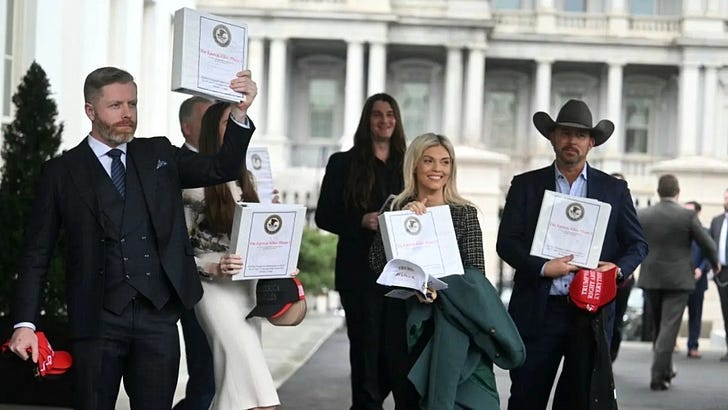
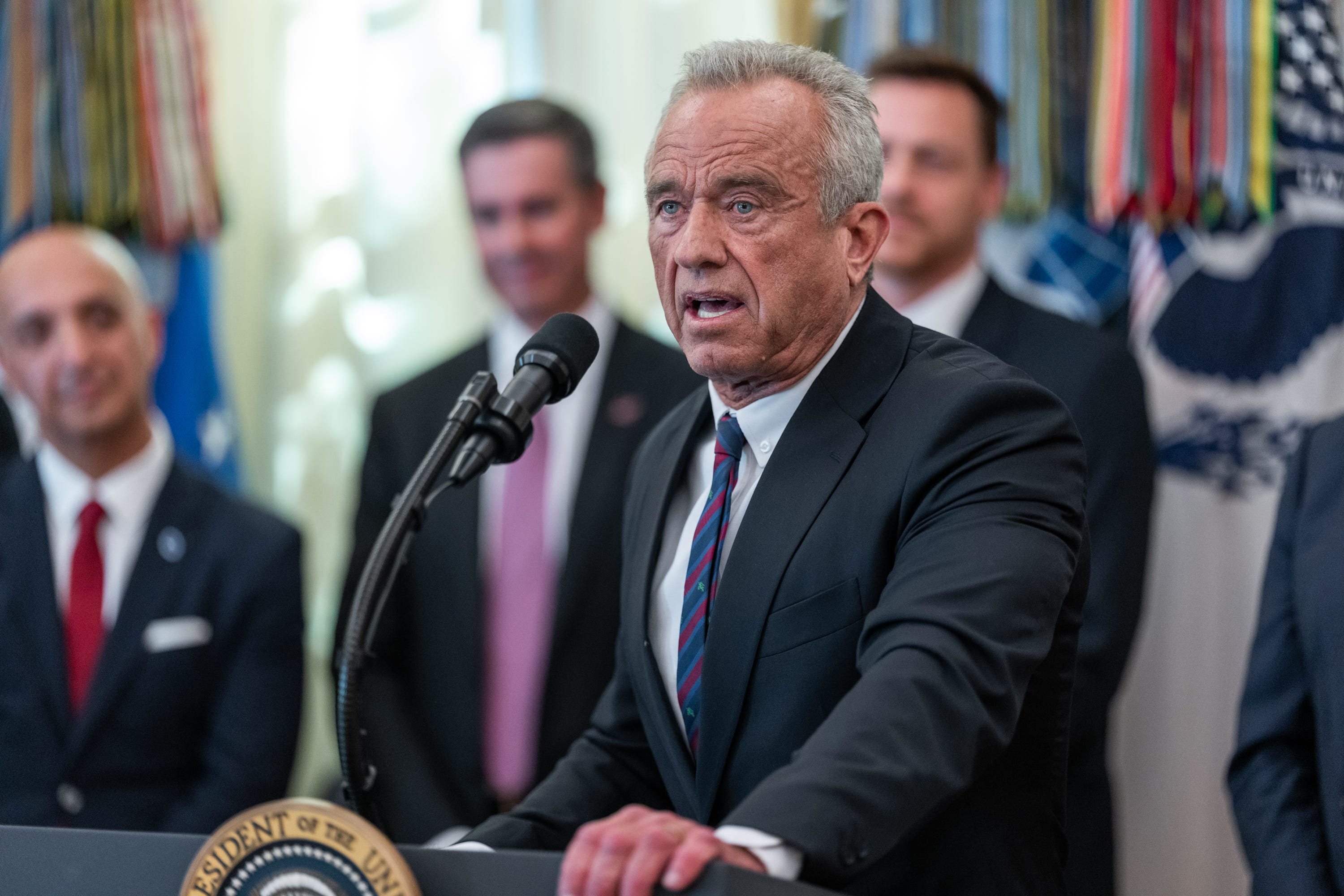
The United States is the world’s most obese major nation, but it’s also the homebase for most of the global health and fitness industry. These two seemingly contradictory facts intersect in a number of ways in our popular culture, but they also are related to our political culture as well: Donald Trump’s obesity is one of his most famous attributes, but at the same time, his cabinet officials like Robert F. Kennedy Junior and Sean Duffy have become memes for saying that they’re going to install pull-up bars in America’s airports to encourage fitness.
The fact that Kennedy, a former Democratic presidential candidate, is even serving within a Republican political administration is another example of this juxtaposition at work.
All of this may seem like blatant hypocrisy or craven opportunism—which it surely is—but there are some larger trends at work here as well, and they point to a deep and often ignored fact that bodies and fitness have always been politicized, especially in regards to what people consider to be “natural.”
There’s a lot to talk about here, which is why I wanted to bring back a friend of the show, Natalia Mehlman Petrzela, she’s a professor of history at The New School, and also the author of Fit Nation: The Gains and Pains of America’s Exercise Obsession, which is a historical look at how fitness and wellness cultures emerged within the country, and what it means for our politics.
The video of our conversation is available, the transcript is below. Because of its length, some podcast apps and email programs may truncate it. Access the episode page to get the full text. You can subscribe to Theory of Change and other Flux podcasts on Apple Podcasts, Spotify, Amazon Podcasts, YouTube, Patreon, Substack, and elsewhere.
Related Content
Fitness has always been political (Natalia’s first TOC appearance)
How a silly video of women dancing to a rap song caused a nationwide Republican freak-out
Marianne Williamson’s ineffective self-help politics
The hidden history of gay Republicans and the far right’s worship of the male body
Why tradwife baking videos are actually fetish content
Audio Chapters
00:00 — Introduction
09:03 — Robert Kennedy Junior and the “naturalistic fallacy”
13:43 — Opposing unhealthy food additives is still a good idea, even if Kennedy backs it
16:19 — Glenn Beck’s moralizing AI George Washington
23:47 — The irony of Donald Trump’s party talking about fitness and the natural
27:29 — “Mar-a-Lago face” and weight-loss drugs
33:36 — Vaccine fears and Trump’s boasts about Covid immunizations
38:08 — Politics of emotion and media environment
42:41 — Gender norms and workplace dynamics
48:20 — Body positivity versus health advocacy
Audio Transcript
The following is a machine-generated transcript of the audio that has not been proofed. It is provided for convenience purposes only.
MATTHEW SHEFFIELD: So a lot has happened since our previous conversation, needless to say, and I have to say, your work is just becoming increasingly relevant. You you nailed all this stuff, Natalia.
NATALIA MEHLMAN PETRZELA: Thanks!
SHEFFIELD: And probably when you started people were like, what the hell are you doing? Am I wrong to say that?
PETRZELA: Oh, you are right to say that. Although it’s that sort of doubtful thing where you’re happy your work is relevant, but also it suggests some pretty disturbing things going on in our political culture. But yeah, to put it in a nutshell, when I first work at, started working on fitness culture as a historian of political culture, and I was like, these things are connected actually.
People were like, oh no, you’re making all of these kind of farfetched things, fitness is just the body or just the gym. And now we can’t turn anywhere without there being this sort of like very political use of fitness in the body. So I guess I’m glad I was right to make those connections, but also it’s too bad for our republic.
SHEFFIELD: yeah. Yeah. Well, no, exactly. And so, but if you could just give us a. For people who missed the first discussion or [00:04:00] haven’t bought your book yet just give us a little recap. I want to give, you a chance to plug it right in the beginning here.
PETRZELA: Yeah, thanks for the yet on, haven’t bought your book yet. So my book is called Fit Nation, the Gains and Pains of America’s Exercise Obsession. And essentially what it does is it charts the history of the idea that exercise is good for you, and that we should all be exercising more. That’s actually a relatively recent idea in American history, and as it shows that intellectual history, to a point of consensus, which is actually surprising today. Like I always say, we disagree on everything in America, but we all kind of agree exercise is good for you and that we should be exercising more. Despite that consensus, only 20% of Americans actually exercise regularly. And so this book tells the story about the emergence of that consensus, but also it’s the unequal participation or actualization of it.
SHEFFIELD: Yeah. Well, and trying to increase the participation that is, seems to be one of the biggest initiatives of RFK Junior as people may have seen recently, he was showed up in the airport and attempted to do some pull-ups. Did, they didn’t go very well for him.
PETRZELA: Yeah. Yeah, the pull up police was really commenting on his form and lack of extension. I do have to say for he’s 71 years old, right? The fact that he can get even three quarters or half pull ups are not, are, is not terrible. But I think the bigger import, of course, of that initiative is that people were very frustrated because there’s so many problems with, forget fitness, with our transportation infrastructure. And the idea that the response of this re administration is, oh, we’re, upgrading airports by putting in pull-up bars. That, that feels really just surface and really cosmetic. and also very finger wagging. Like, oh, what would need, what needs to happen to make your travel experience better?
You need to, be doing more pull-ups. And so that just feels, I [00:06:00] think, incomplete on a lot of levels. I will say for any of you listeners who go out and dig through my social media, I actually think having pull up bars and other exercise in a airport is not a terrible idea. Like I’m all for it. I would love to be able to be a little bit more active and to have that free, especially when so many perks and airports are now, in luxury lounges.
But the idea that this is a federal priority especially at the expense of others, I get it. That is not great.
SHEFFIELD: Yeah, it isn’t. And, but it, is really illustrative of their overall approach though, in that they see everything in terms of, personal moral feelings by the public. And, in that regard just, and just pack it into this particular context, the Trump administration when they, when he first became president, one of the first things that he did with regard to airline travel was to remove regulations that the Biden administration had put in that required airlines to pay customers whose flights they had delayed for no reason, no mechanical or weather related reason, just for monetarily reasons, because they thought, well, this flight doesn’t have enough people, so we’re going to delay it.
That’s so, like, that’s an immediate thing that Trump did to make airline travel much worse. And then also, of course, he’s come after air traffic controllers. But according to them, the reason air travel is bad is because you are not doing pull-ups in the airport.
PETRZELA: Right. No, I absolutely, I am a hundred percent on board with those critiques. I mean, it is so crazy. It’s so individualizing, it’s so condescending, honestly. And I think that’s indicative of something much larger, as you say, with this administration of constantly blaming the victim, and particularly with RFK Junior in this position of kind of suggesting that like individual bodily management technologies, I guess, are the answer. What is so frustrating to me is that exercise actually is so good for you. So many more [00:08:00] Americans should be exercising. We should have the federal government be on board with making this an urgent national priority. By the way, that is what Michelle Obama was trying to do. Right?
SHEFFIELD: I was going to say that, yeah.
PETRZELA: Like I guess we’re going to get there. I mean, Trump administration I, wanted nothing to do with any of this stuff. But I just find it so frustrating that the way that this administration is framing like a very positive promotion of exercise, which I’m always going to be on board with, but it’s all about you’re lazy. Like let’s compete with each other. And like I say, most importantly, to the exclusion of actual things that would probably make your travel better or actual things more relevantly that would make your health better. Right? Like regulation on healthy food, like food stamps, like all kinds of federal programs that are being cut back, like vaccines, by the way, that are being cut back that actually damage our health.
And so the idea that you’re being encouraged to go do pushups, even though I’m all about pushups by the federal government when they’re taking away these critical things, is really insulting.
Robert Kennedy Junior and the “naturalistic fallacy”
SHEFFIELD: Yeah, it really is. At the same time. And I guess one of the things that has happened, obviously Trump won since the last time we talked on the show. One of the other things that did happen is that RFK Jr had, formally transitioned to from being a, sort of a, I guess we’ll say a granola left winger asterisk. We’ll put an asterisk on there for everybody. But, as a nominal, as an, as a identified Democrat to becoming a member of the Trump cabinet.
Now I would say, and we did ki we touched about this in the general sense that this was inevitable. That this was going to happen, that he would join up with them.
So, and a lot of that has to do with the idea of what is natural, I think and that the naturalistic fallacy is the common thing that he, didn’t change his thinking.
PETRZELA: right. right. I’ve always said that, I mean, I think, a lot of what’s at play is the unique opportunism of RFK [00:10:00] Junior, and that’s maybe, we can talk about that specifically. But I think in terms of my work, the thing that’s more interesting about that is the kind of ideological and philosophical and political flexibility and malleability of wellness culture, exercise culture, writ large. And I think this notion of the natural that you point out is a very good example of that.
I mean, RFK Jr comes out of a world in the sixties and seventies where resisting chemicals, resisting pollution, resisting like Big Ag, Big Pharma, Big Food, was very much a left wing consideration.
Right? This was about back to the land, about naturalness, about resisting big business in a lot of ways, right? Now we have seen that discourse really migrate to the right with him being like a key figure in that, that now you see that kind of same invocation of the natural in some ways being targeted at the same places, right?
Big Pharma remains very much a target. Big Food remains very much a target, but I think being invoked. Have a very backwards looking, kind of championing of the natural order of things.
The, part of that I pay most attention to, which I think is a very powerful part of it, is around gender in particular, right? Men are supposed to be this way. Women are supposed to be this way. It’s. Physically, biologically encoded. It’s natural for a man and a woman to be together, for a man to be stronger and a woman to be, cooking the whole trad wife thing as part of this as well. And so I see, you see that kind of malleability of wellness culture, and particularly this idea of the natural migrating, at least in our discourse, much more from the left to the right.
SHEFFIELD: Exactly, and, and, it has to do with the fact that, these people who may have kind of had their origins in, left on the, on, in, in opposing corporate factory farming or, chemicals and food or whatnot, they didn’t actually understand the broader liberal [00:12:00] context.
They, were only purely about the natural. You know that, which is really the naturalistic fallacy, which, and I’m going to just read from, Edmund Burke. and this is why I think, there, there’s just gravitational pull of, conservative and reactionary party. So in his Reflections on the Revolution in France, he wrote that: “In all societies consisting of various descriptions of citizens, some description must be uppermost. And the levelers, [i.e. people who want equality,] therefore only change and pervert the natural order of things.”
And so, if, naturalism becomes the thing that’s your priority, then you’re going to be gravitationally attracted toward right wing politics. I think that’s what we’re talking about.
PETRZELA: I think at its essence that’s true. and I, that’s a helpful quote from Burke. I say that though while try, like, as an intellectual, I say that, but then as a citizen living in the world and trying to raise a healthy family and like live a long time and have healthy joints. It’s hard sometimes to disaggregate these specific policy positions.
I don’t want red dye 40 in all my kids’ food. I think ultra processed foods are a scourge, I really do on our society, and so I know that’s not exactly what you’re asking, but I do think in terms of your listenership and being an informed citizenry trying to act responsibly, it’s really important to keep these intellectual trajectories top of mind before you go whole hog into whatever you’re going whole hog into, while also realizing each policy issue might involve some sort of, I don’t know, accommodation’s the wrong word, but kind of thinking pragmatically, I guess.
Opposing unhealthy food additives is still a good idea, even if Kenney backs it
SHEFFIELD: Yeah. Well, yeah, and I, am glad you said that because this, me saying that the naturalistic fallacy is bad doesn’t mean I want people, to, have all kinds of franken foods and what. Not like I’m, that’s not what I’m saying.
PETRZELA: No, I know you’re not. Yeah. You, are far too [00:14:00] sophisticated for such things. But like, for example, something that I’ve seen is like, when this thing about the dyes was in the news, it was like a few months ago and there were people being like, I don’t care about the dyes. Like, vaccine policies, the real problem.
And I’m like, of course, I would rather have my children have access to vaccines, than not have artificial diets in their foods. But guess what? Not having those dyes is also a good thing. So I think that there’s something hard there. That’s very much where I am with the pull up bars in the airports, more exercise equipment in airports.
That’s great. We should be able to say that. That’s great. But we should also be able to point out these much larger issues, both with the administration and as you’re saying, the kind of logical extension of some of these ideas when you think about them as ideas.
SHEFFIELD: Yeah. Yeah, exactly. And, when you look outside of the United States, they don’t allow these chemicals additives in food either. So, and they also have vaccines as well. So like, we can, like more than one thing. It’s okay.
PETRZELA: Yeah, totally. Totally. Yeah. It’s very, I don’t know if it’s peculiar to American politics, but we do like to gravitate towards the extreme view of everything it seems.
SHEFFIELD: Well, it’s, and I think that’s, it’s a function of negative partisanship. So if, somebody who has a lot of really stupid ideas picks up an idea that is actually one of ours, we can still like that idea.
PETRZELA: Right. Right, right. It does not pollute it at its core. That’s a very good point.
SHEFFIELD: But at the same time, it is still important to understand that the, reason why we are in favor of vaccines and the reason why we don’t like potentially carcinogenic food additives it isn’t because they’re unnatural because. the entire point of human society is unnatural.
Like everything we do is like, the fact that we’re talking right now on, over the internet on video is unnatural. if the a, if the natural is, all that you should do, then you should go and live like an Amish person. That’s what you should do if you really believe that. So you have to, dial that back and, prioritize where [00:16:00] does that fit in and, over. And, overall having a good society, that’s gotta be, the what the ultimate objective is. Not pursuing whatever is natural because you’re going to go nuts.
PETRZELA: Also, the natural environment is full of dangers and poisons and harmful things that, I don’t think we would like to let run free. So I agree.
Glenn Beck’s AI George Washington
SHEFFIELD: Yeah, exactly. And then just kind of backing the, topic even further out here, there is this, idea not just the naturalistic fallacy, but also the, when you look at, pretty much all right-wing politics devolves to moralism and moralizing, and this is why they’re so attracted to, these fundamentalist religions is that they believe everything is a moral failure, failing if you all problems ultimately devolve back to that.
And I think. Glen Beck recently, I think he illustrated this so perfectly with this absolutely bizarre AI video that he made. so, so he, just for the, audience, Glen Beck, he is obsessed with the founding fathers of America, and he thinks that. All modern day political problems can be solved by directly using their ideas, which of course is absurd because, we have so many things that didn’t exist when they were there.
And they themselves did not sanctify their own beliefs. So, but nonetheless he, so he, obsessively collects documents from the founding period. And then, so he’s, put them all into an AI model, custom AI model that he made. Which he claims does not hallucinate, which is actually totally ludicrous. Not true, not possible actually.
But nonetheless, and then he made an AI character that is, he calls it George ai. And I’m just going to play the clip here for the audience so they can see what this is. It’s so bizarre. And basically it’s all about if things that are bad in society, they are your fault.
(Begin video)
Glenn Beck: George, we have programmed [00:18:00] a lot of information and given you a lot of information on what’s going on in today’s America. based on your writings and the writings of the rest of the founders, what is it that you feel is the biggest problem or where we should start to fix things?
George AI: If I may speak plainly, my countryman, the danger, the greatest danger to our republic lies not in foreign arms or political faction, but in the--
Glenn Beck: May just interrupt you for a second? Could you just dumb it down just a little bit?
George AI: Okay. I do have 29 points, and they’re all referenced to exactly what we said in the past for this.
Glenn Beck: Just speak in today’s language.
George AI: Okay. Okay. I get it.
Let me speak to Americans. If I’m honest, America’s biggest problem isn’t political or economic. it’s all moral. You’ve drifted from the virtues that make liberty possible in the first place. Freedom, to be free, you have to have discipline, you have to have faith, you have to have character. And if you don’t have any of those things, laws, can’t stop anything, and they mean little. Government turns either weak or oppressive.
You have grown skeptical of truth. You’re reckless with debt. You’re comfortable, blaming instead of building anything. And in my time, we understood that self-governance begins with self-control. Do you even recognize what self-control is?
Public virtue matters more than public opinion. You keep electing these people, expecting things to change, but you haven’t changed. The fix is not going to be found in Washington DC. It’s going to be found in every home, every school, every heart. Where are the citizens who value duty [00:20:00] over comfort, principle over popularity.
America was built to be a moral and self-governing nation. It’s only that foundation that will still save her.
(End video)
PETRZELA: Yeah. Wow. That was really something else. I have to say that, yeah, exactly as you framed it is right that this AI version of George Washington really breaks everything down in modern society to a problem of individual failing, right? Of the failing of individual moral virtue. And I mean, it doesn’t surprise me because I think that’s a pretty facile reading, but a kind of intuitive one of some of the framers’ early documents--
SHEFFIELD: It’s natural!
PETRZELA: Yeah, exactly. It’s totally natural. And also there is this like just constant sense to like look backwards with this nostalgia that like, this was a more moral time. These guys were upstanding figures in a way we can’t even imagine. Meanwhile, we know these were deeply imperfect men, right? In ways that we would consider even almost as disqualifying today, qualify today, qualify. I think in terms of the exercise piece, it makes perfect sense that a romanticized vision of what’s wrong with America as being a failure of moral virtue. Well, what’s the solution, to pull-ups in airports or work out more? I mean, that is. I think understandably exercising, working on your body, disciplining the flesh if you will, that is like an instant way that anybody can literally perform their own moral virtue, right?
I am improving my body. I am enduring pain in service of getting better, being better. What is more American than that?
SHEFFIELD: Yeah, well, yeah, and, of course it’s just not enough and, but this, romanticized, bodily idea that, I mean, it, it does also. it’s, always been there. And you were telling me before the recording about the, this idea of making the founders buff in, in statuary. Tell us about that.
PETRZELA: Yeah, so what’s interesting is that you can read Ben Franklin and he talks about going for brisk walks and getting [00:22:00] your blood flowing. So there is this kind of early idea that exercise is good and moral for you, but these guys were not exercising in any way that we would consider exercise today.
In fact, for many years after that exer rigorous exercise for many years after that vigorous exercise is considered quite dangerous, and the statues early on of the founding fathers, kind of show bodies that reflect that their bodies are kind of nothing special in terms of what you might see at the gym.
When I was studying--.
SHEFFIELD: Dad bods.
PETRZELA: Yeah. Dad bod. I guess founding dad bod, founding father bod. Right.
When I was doing the research for Fit Nation, though, something that I learned is that Charles Atlas, who was this famous fitness figure in the early 20th century, that one of the things that he did was he would sit for sculptors who were actually remaking bodies of the founding fathers in statuary to look more like Charles Atlas, who by the way was called like the “most perfectly developed man.” He had his rippling six pack and actually in Washington Square Park, the Washington that is there now, George Washington actually looks like he’s been hitting any one of 20 gyms in that neighborhood before being rendered in bronze there.
And that is not the way they looked. But you can see, I think that’s a really interesting moment because you see how this civic virtue or political virtue starts being really knitted together with the idea of an apparently physically fit body. It’s like right there when you see a statue of Washington and an idealized image of him, and I think that the, whether it’s the Trumps, or by the way, plenty of Democratic politicians have kind of leaned into this stuff as well, but as you see, I think that is an interesting origin point or one origin point to see the way that physical bodily virtue gets transmuted or equated with civic and political virtue as well.
The irony of Donald Trump’s party talking about fitness and the natural
SHEFFIELD: It does. Yeah. And, there, of course there is a real irony in that this is Donald Trump’s party that is doing this. Like a guy who is is famously obese [00:24:00] and also actually hate exercise and has that viewpoint that you were saying that thinks that exercise is bad for you. This is his party that’s doing this.
PETRZELA: I mean, this was the talk of the first Trump administration. I remember I wrote a piece, it was one of the earliest pieces in the Made by History vertical at WA and the Washington Post that talked about how Trump’s distaste for even digust for exercise was a complete outlier on for the Democratic and the Republican Party, like at least since i’d say Kennedy, but you could even date it before that, at least since Kennedy, you had both politicians on left and right kind of going, showing themselves jogging or lifting weights or at the gym or whatever as a sign of their fitness for presidency, for political life. The fact that they’re kind of relatable, we all need to go gym.
SHEFFIELD: Yeah, they’re disciplined.
PETRZELA: I mean, Donald Trump at that point and kind of still, but very vocally then represented something completely different. He talked about how he embraces this 19th century theory that you’re born with a finite amount of energy and then you can, you use it up. And so who are all my idiot friends? I think he said doing triathlons, like that’s just going to use up your energy.
He was ordering steaks and double scoops of ice cream and just kind of, and said that my exercise is just giving speeches. Right. And really they cut Michelle Obama’s nutrition package that was under Let’s Move. It was big government, the nanny state, right? I want my big gulp soda. And I think that is very interesting, because he was both invoking this like, older version of kind of like morally dissipated, I think luxury, right? Like the fat cat, right? How do you show that you’re affluent and on top you have abundance?
Most of the rest of society had moved on at that point. Like really rich guys are going and wearing like the newest technical gear and they look like they just did a triathlon. He really felt out of step with that. But I think to me, a lot of that had to do specifically with distinguishing himself and like really condemning [00:26:00] the Obamas since they were known as like the fittest, president, the fitness people in the Oval Office and Michelle Obama in particular.
Nutrition and fitness policy was a big piece of her at First Lady package platform.
SHEFFIELD: Yeah. Yeah, absolutely. And, and that tension, it never gets debated on that side or resolved in any way. And like, and, they don’t even discuss it. They just kind of put his views in a box and don’t talk about them.
PETRZELA: Yeah, I think that’s right, but I also think that it makes sense that the particular version of like White House fitness culture that’s being promoted right now is what it is. Because, there’s not like, it’s all guys, first of all, it’s all guys like showing their big muscles doing pull up contests. Like you really don’t see women involved with this whatsoever.
I mean, and which is interesting to me because the Trump administration has also made a huge deal about how they’re the real defenders of, women’s sports, of course, right? Like this is. against trans people for the most part, you would think at that big unveil of the pull-up bar, wouldn’t they have a woman there doing pull-ups as well?
Like, and so I think the only way that these things kind of square is that they’re part of the same kind of like macho posturing, which has always been Trump, although these guys are taking it to the gym. But, Yeah, it’s a version of fitness culture, which is so different from a Michelle Obama’s version of it.
I think that’s on purpose and I think it’s the only way that the Trump I administration really does kind of cohere with the Trump II. Yeah.
“Mar-a-Lago face” and weight-loss drugs
SHEFFIELD: Yeah. Well, and, the other kind of interesting juxtaposition of these two views also is that. Despite having this obsession with the naturalistic fallacy, which Trump also has, in his own way. They also, there’s two trends in MAGA land that are at the top that are very notable.
One is. The obsession with plastic surgery and heavy makeup for women, and that is in the news as we’re recording this with, this week with, Vanity Fair [00:28:00] did a photo shoot, an article about some of the top White House staff members and the photographer who always does this, he didn’t touch up the photos or alter them, and he, posted them in full close ups and, what people noticed from these photos is that Karoline Leavitt, Trump’s press secretary, uses lip injections. Which, oh no, that’s unnatural. Shouldn’t do it! But Mar-a-Lago face is a thing.
And then the other thing that they’re big on is weight loss drugs, which God, you talk about experimental, potentially dangerous things for people. I couldn’t think of, that’s one of the most dangerous things to deploy at scale for, in my opinion as a national policy. Jesus. I mean, these two things are completely contradictory at the natural,
PETRZELA: well, there’s so much there. I mean, I think absolutely the Mar-a-Lago phase, which is so clearly a plastic surgery induced look. Yeah. It’s completely at odds with any idea of what’s natural. And I think really shows how much the notion of natural gender norms or gender appearance is totally romanticized like these are.
Interventions that look fake to anybody who knows anything, but also are meant to almost like create the ideal version of like what a woman should look like, right? Like large breasts, big lips, like the blonde hair, all the rest. the Ozempic piece, I, or the GLP one piece I think is, like. I have resisted being really conclusive about it.
Yeah. There’s no doubt about it. It’s not natural, but there’s so many competing discourses about that because Yeah, on the one hand, I mean, I agree, like it seems alarming to release something like that as scale, that people have to stay on forever. Right. And that we don’t really know what the outcome is going to be. So that I do think--
SHEFFIELD: They’re so new.
PETRZELA: On the other hand, given how many illnesses in our country are correlated, if not caused, to excessive weight, and how hard it is to lose that weight for many people and how expensive those drugs have been, [00:30:00] I actually am sympathetic to the idea of making them more accessible.
Although I have no doubt they’re all going to be used in like terrible ways, like advance, like the worst of America. But but I think that’s complicated and like, it, there’s a lot going on there, let’s say.
SHEFFIELD: Well, yeah, and, but, and it, the, weight loss drug, it illustrates another contradiction of this ideology because, on the one hand they say that they’re saying, well, we have to get these drugs out to people. And the government has an interest in health and providing it as a federally subsidized thing, but we’re also against subsidies for Medicaid.
PETRZELA: Oh, totally. We’re also, again, yeah, I think that’s really important. I thought you were going to say something else that, I’m not sure what RFK Junior’s saying about it now, but early on there was a tension in this MAGA coalition, an understandable or predictable one between him and the Trump administration where RFK was kind of anti getting behind these GLP ones and using this kind of Washingtonian or Glen Beck’s version about personal virtue of like, oh, this is the easy way out.
You just eat well and exercise like you’re going to improve your body. a very kind of traditional way of thinking about that Trump, very differently, ‘I’m going to be the one that gets the fat shot to the masses,’ right? And I’m not sure exactly where they are in that debate, but there, I think also you see that ideological tension between like the advocate for the natural and like the hard way of doing it versus the, I have no ideology except wanting to be adored and I don’t know, hating fat people.
I mean, I think that’s more the Trump side of it.
SHEFFIELD: Yeah. Well, and, I think in his case, likes the idea of giving people things that will make them like him.
PETRZELA: Right,
SHEFFIELD: and so like, that’s why he has, talked about do doing tariff rebates, even though they haven’t really brought in that much money, But of course it doesn’t, it has no ideological coherence at all. Because you really want to have people like you, then you should give them healthcare and [00:32:00] have, them be healthy in a lot of ways. Not just not be obese. But they don’t, but they don’t think that far. and I think that’s, one of the, ultimately, if that’s the, final layer of all of this, this, their epistemic posture, which is my personal sort of reactions to things, that’s what’s true. Not anything else.
Like my, so my immediate reaction to, well I don’t like somebody because they’re, because I think they’re fat or I don’t like someone because I think they’re, they, that they’re L-G-B-T-Q because they’re unnatural. But on the other hand, I’d love plastic surgery on, on, the women in my life.
Like, these don’t make any sense. but they do make sense. Only if that’s your posture, which is my immediate reaction is real.
PETRZELA: Right. Well, the normative, it’s like a normative kind of naturalness, right? Natural by the standards and that I de to be appropriate. I mean, if you go back to the kind of like 1970s like hippie version of the natural stuff, just to stay with the like body image kind of conversation. I mean, those are the women who are saying, I’m not shaving my armpits and my legs.
I’m going to wear no bra. I’m going to let my tummy hang out if that’s what I have. That is not the version of the natural that the Trump world is getting on board with. And so I think, yeah, I think that like to the extent that we can point out those inconsistencies, I think that is really, that is like really shows the lie.
The danger of embracing natural as a worldview or a kind of a guiding philosophy.
Vaccine fears and Trump’s boasts about Covid immunizations
SHEFFIELD: Yeah. Well, and then one of the other contradictions in this political coalition is about the, about vaccines, which we touched on just a bit. But you know, like, people are now talking, as Trump’s in his, coming up to his second year of his term, and he can’t be on the ballot again.
And so, people are starting to think of him as a, [00:34:00] lame duck, especially considering all the elections that they’ve lost and how he’s got his lowest approval ratings ever. so people are now looking to kind of defy him or, reject his ideas sometimes even in his own party.
But when we look at it, I think. It’s, I think it’s accurate to say that, the, COVID vaccine was the first time when he got people challenging him from within the party, and, it’s related to this, I think.
PETRZELA: Oh, I definitely think so. I mean, isn’t it amazing to think back to operation warp speed and the fact that he was so proud to be getting the vaccine out and then to fast forward, not even that long, not till today, so, but to like, I don’t know, what was it, a year even at.
SHEFFIELD: Yeah.
PETRZELA: Yeah, within a year. And to see the way that the Feds giving you or forcing you to get vaccines was seen as like the problem with the left, And I think that’s been really interesting to see. And also to see him kind of walk away from that win. Like I think as we were saying before, like Trump’s ideology is personal victory, right? And so that was considered a huge win at that point. But now, like you would never hear that. Never hear him talk about it.
And yeah, I think in terms of the natural conversation, I mean that’s always been I think a huge and dangerous problem with the kind of natural living crowd has been their resistance to vaccines, which of course long predates RFK Junior. But that was really fringe. And then it came into the national spotlight.
And, I don’t know if, and it’s not it, was focused on the COVID vaccine, but we’ve seen the downstream effects that like parents aren’t getting their kids’ measles vaccines or, flu shots and that is having real, impact. And I will say. I blame, I mean, I blame everybody, but, I definitely think this is obviously a problem with the Trump coalition and the way they weaponized all this and have sent us in this anti-public health, moment.
But I also think some of the [00:36:00] moralizing from the left around COVID protections, vaccines and otherwise did not do any favors, for the American public. And we saw Reasonable resistance to some of the made up measures like oh, six feet apart, or, a bunch of other cloth masks, no cloth max masks.
And you better do it or you’re a bad person. We saw, I think, some reasonable critique to that metastasize into this complete condemnation and rejection of so much basic public health knowledge that we need to stay alive and healthy. I mean, I’m terrified of what’s going to happen the next time we have a public health emergency and we have like a really hollowed out C, D, C, they didn’t handle it perfectly last time, but at least there was a, they there.
SHEFFIELD: Yeah. Yeah, that’s a great point. And, even with Trump and vaccines though he’s, he had a comp, he’s had a complicated or like multifarous viewpoint about them. because originally before COVID and before he was the president, he was actually stating publicly. He thought that vaccines caused autism.
And then, once he became president and could put his gold star on or operation warp speed, then he did. and he still pro COVID vaccine, although he doesn’t talk about it and he says, you guys won’t let me talk about it when he does rallies. So like, again, it’s just this. I, ultimately I, that’s one of the points that I guess I try to make a lot to people is to understand that the reason none of this, the, these right wing viewpoints make any sense is, or that there’s so much hypocrisy and contradiction, is that they don’t actually believe in coherent logic.
They just believe how something makes me feel in a given moment. That’s what’s true.
PETRZELA: Yeah, it’s a total politics of emotion. And by the way, I think this is connected to illiteracy crisis, to polarization, to our like rapid fire, quick take, media environment as well. Like there’s just this immediacy and an emotionalism to all of it that really infects, [00:38:00] our politics. And I think that’s like in many ways I feel like the right doesn’t even try to resist that. I think the left is a little better at resisting it, but we see this across the political spectrum, I think
Politics of emotion and media environment
SHEFFIELD: and then, as, it, looking into the politics of, gender, as this manifests as well. I, think a lot of that I is why we’re seeing just this massive growth of misogynistic podcasters on the right wing. That, pretty much, I mean, it looks like at this point, all, relatively new right wing figures are men.
and if and, they’re openly misogynist and, even fascistic but even the women are that way too. Like they
PETRZELA: Oh, I was say don’t sleep on Erica Kirk and Candace Owens and some of these other ladies. I mean, there are plenty of women out there who are doing this bidding, right? And I think like, well it’s important to realize, like, and I think it’s really interesting to think about like, what do women gain from this?
Like, I want to understand, it’s so inimical to me to hear Erica Kirk saying like, women who move to cities are relying on the government as their husband. I’m like, what are you talking about? You? I’m sure you heard that that clip maybe, but what are you talking about? But then I am thinking like, what women who listen to this and agree with it, and there are a lot of them presumably must be getting something out of this.
And I don’t know, I kind of default to an old feminist studies take, I guess, which is sort of like in a patriarchal society, there’s a lot to gain from attaching yourself to patriarchy, right? And to playing by those rules. You’ll never, you’re never going to be on top, but it’s maybe better for than being cast out by for it and I by it.
And I think that kind of speaks to a lot of what we’re talking about. Like, yeah, it sucks to be getting lip injections and transforming your face and your hair and looking a particular way and all that. and that’s something that is almost uniquely visited upon women or at least much, bigger.
But do you stand more to gain in our society by looking a [00:40:00] particular way than by rejecting it all and potentially being cast out? I cannot blame a lot of women for making that calculation, and I think that it’s easy to be like, oh, there are just, they’re so pathetic or whatever. But I think lots of us probably do that in smaller ways, in worlds that we live in that don’t overtly adhere to those politics at all.
But I think, I mean talk to any group of women about like their experiences in the workplace, they’ll tell you even they’re not working at right wing think tanks and you got treated really differently if your hair’s not done or you don’t look pretty or you’re overweight. And I know men that face this as well, but it’s much easier to, there’s just new, I know I’m going off a little bit, but there’s new data that shows that like, women who put themselves together at work, nails, hair or whatever, actually make more money.
And I think, and in a bigger differential than men who do that. And that’s not a political survey, but I think it speaks to the way some of these ideas, course through our whole culture. So sorry for the little rant on that, but I do think it’s to think about because it’s really in our face with Mar-a-Lago face, but it’s much bigger than that.
SHEFFIELD: Well it is. and, and I think that’s also just going back to these, right wing, misogynist podcasters like Andrew Tate or some of these other guys that you know, really in a lot of ways. So, so as legalized discrimination of, or overt patriarchal discrimination has become largely illegal, although of course they want to bring it back.
But as it’s become, you can’t get away with it, doing it so overtly as it used to be. that’s really kind of forced kind of a reckoning or a rearrangement of. The idea of societal heterosexuality, and a lot of people are really kind of resisting that I think in a lot of ways. So in this and, these patriarchal norms.
That both, that, that really have, been inculcated in people from birth [00:42:00] and just from decades of, societal acculturation, things like, well, women have to, it’s better for a woman to stay at home. It’s better for a woman to not date a man who makes less than her. It’s better for a man to, to never apologize. So like all of these norms that actually are not ne, that they’re not political in themselves, but they really have, still permeated the culture and. They make it so that a lot of people who do present socially as heterosexual, they’re very dissatisfied with it, but they don’t understand why that these are systemic issues and they’re not personal ones.
Gender norms and workplace dynamics
PETRZELA: right. Yeah. No, That did make sense. But I think getting back to these right wing male podcasters and what they’re tapping into, I think that you’re right that as a lot of this stuff has become less legal right, or socially acceptable to say at like the office for example, those guys really tap into this sense of like, here’s where you can say what you really think, right?
Or like, forget all those HR rules and like whatever you learned in your social sciences class in college or that DEI training you had to sit through. Now you can be yourselves and we can like have real talk over here. And I think that, and often implicit in that is like things have gone too far in the other direction.
We guys are like coming to like reclaim, right? And what I find interesting about that, and I’ve been in actual rooms like this, is that like, I’m like, well, how far have things really gone? Like this room that I was in was a group of men who work on Wall Street and they were all complaining that dEI has gone too far.
They weren’t talking about women, because that would’ve been weird because that was a woman in the room. Right? I mean, it was already kind of a strange conversation, but as they were complaining about this and honestly raising some legitimate complaints about some of these programs, I’m like, but it’s too far really the problem because look at this room, you guys are like still the titans of industry, right?
It was a pretty ethnically homogeneous place. A [00:44:00] homogeneous group. And I think that like that notion that things have gone too far and we’re the minority voice speaking truth to power, and we’re taking it back is fundamentally wrong because look at where the power still resides,
SHEFFIELD: Yeah. Well, and also like, I think maybe one of the most immediate senses of that is it is workplace flirtation or approach. because like, I think basically what Me Too, the aftermath of it exposed is that. lot of men have no ability to contact women outside of their job and they don’t know how to and then at the same time, a lot of women are, have no ability to approach a man, and they then, they don’t know what to do about that.
And so like. So if you’ve created so in a system which has been reconfigured in which people are left alone at the workplace, which is good, like we should leave people, let people do their fucking job. But it’s, uncomfortable and people have to figure out how to adjust to that. And I think in a lot of ways some people are resisting that because it’s harder, it’s different. It’s not what they’re
PETRZELA: It is harder and it’s harder to diversify the workplace and have to deal with people who isn’t like your buddy’s friend or who went to the school like you or who’s a woman. Right. It’s hard though. I mean, I think that it’s been an incredible, it’s been incredible progress. The sexual harassment, like legal structure, which has been developed over the last 40, 50 years and now is being unmade in a lot of ways. It’s huge and positive. I do think, and by the way, as someone who met her husband at work in a very male environment, that the, some of it is enacted in a little bit of a ham fisted way, in part because Americans spend so much time at work, right?
That like. I am frustrated that sometimes some of the justified backlash of what can feel like paternalistic policies gets, again, to use the word again, metastasize into resistance to very sound policies about people with different power differentials. Like not being able to date at work or be either being [00:46:00] like real reporting structures for people who are harassed at work.
And so. It’s, hard to fix this, but there’s been really great progress. And then some of the backlash really like takes away, it’s a baby in the bath water situation in a lot of ways.
SHEFFIELD: Yeah. And, yeah, there’s no quick answer to that and we’re certainly not going to solve this issue on, on, on a single podcast. but it’s, I, guess what I’m trying to say is that, it’s, there are legitimate concerns that people have on these, on, with regard to this stuff and, discomforts and, things to learn.
And I think that’s an area where the broader left has to do better at acknowledging that people. Don’t know how to navigate this new world in some ways, and, and, that’s true with regard to health and fitness and wellness and all that as well. Like these are, people have the right to have concerns about things that they don’t understand.
PETRZELA: Yeah, absolutely. And I think, I mean to get back to that point before about health and fitness and its political malleability, one of the things that I find so sad and potentially tragic is that when you have these right wingers claiming the fitness space as their own, you risk alienating so many people from an activity that should be universalist and should be appealing to all. Because it’s about literally our fundamental ability to live well. And so when I see, some of this stuff online of like, oh, why is the like workout to, right wing pipeline so obvious, or the Venn diagram is a perfect circle between like a MAGA guy and like a ripped guy. And I’m like, no, it should not be this way. And I think sometimes the left leans into it.
I mean, it was when the presidential fitness test was going to be put back in schools. This is just like a few months ago. And there are some issues with that for sure, but I think generally PE policy from the top is good and creates some standards. But one of the reactions was all of these like liberal journalists and online people who were like the presidential fitness test. Let me try to do it.
I can’t even do one pushup, like, pull, the sit [00:48:00] ups are for MAGA people. And I was like, oh my God. Like this is not the right critique here. Right? We should be owning this space and claiming physical fitness as a kind of universal human right. And and that, and just naming it that, not letting it be claimed. So yeah, I found that a very annoying reaction.
Body positivity versus health advocacy
SHEFFIELD: Yeah. Well, and it’s tricky because, you don’t want to shame people for their body. That’s, and that because that’s wrong. But at the same time, it is still a fact that if you are excessively overweight that’s bad for your health. And you should want to try to do something about that, but you should never be made to feel bad about it.
and it’s tricky. Like this is, these are, conflicting pulls of reality and, but, it’s okay to, pursue both of them. I think, we can
PETRZELA: there is there We can have two ideas. I hope we can. I think in this podcast we’ve had at least like 10 ideas out there. But there are people who say you shouldn’t, like, it is not anyone’s business to tell anybody that they should want to be healthier. Like that is a very kind of hegemonic way of approaching individuals and don’t tell them how to use their bodies, et cetera.
I think that critique is overstated. I think that yes, we should not be telling people exactly how they should look or how they should. Much they should weigh, et cetera. But I think creating a culture where people are encouraged to pursue their own health and to move more and to provide more access to different ways to do that really should be a top priority.
Like that is not a MAGA thing or a political thing. That should just be a thing of a good society.
SHEFFIELD: Yeah. And yet it also is true that, for some people with different body structures that they might appear to be, overweight, quote unquote, but they’re not and they’re just fine. So it’s an, it isn’t, the, your business of how a individual person that’s not close to you or that’s not your [00:50:00] family member, it’s not your business what they, what their health is.
But as a society, it’s, we can, shoot for a, better median, if you will.
PETRZELA: Yeah. And I think a big thing, and this is of course through our conversation here, that the Trump White House is really many, in many ways knitting together aesthetics with health. And that is not. Accurate. Just like you said, there are many people who don’t look like they could be a fitness model, but they’re out there doing triathlons or whatever.
and so I think that we should resist that connection that is very e hard to resist when you’re being bombarded with visual imagery all the time, and whether it’s explicitly making that connection or not.
SHEFFIELD: Yeah. Well, and one way that, that society can move toward a, better fitness median is to have more walkable cities. And, push for policies that encouraged trains and, walking and vice, and cycling, but these are also what Republicans resist.
So it’s like you guys say you want fitter people and make them exercise more.
Well, the easiest thing for anyone to do who can walk, is to walk and to, incentivize them through the, your civil society structures to do that. And that’s not there’s, and that’s a great thing. That’s nothing to apologize for.
PETRZELA: All right. A lot of these are presumably public works projects, right? Better lit streets, safe streets, parks, recreation, facilities, housing that is inexpensive enough that you’re not driving two hours each way to work, and then you have no time to do any of this kind of thing. Yeah. A lot of that is public policy that goes beyond pull up bars in airports to say the least.
SHEFFIELD: Yeah. Absolutely. All right, well, is there anything on all of this that you, feel like we got, we need to hit a bit more, or do you think we
PETRZELA: I think we kind of got it. I mean, I could go on forever about this. It’s been, it’s fun. The book came out a while ago, so it’s nice to come back to talk about this.
SHEFFIELD: Yeah. Okay. Cool. All right, well, so if people want to keep up with the stuff you are doing, Natalia, what, is your advice for that?
PETRZELA: These days I’m most on Instagram at Natalia [00:52:00] Petra, but you can find me on LinkedIn, occasionally Blue Sky and threads as well.
SHEFFIELD: All right, sounds good. Glad to have you back. Okay.
PETRZELA: Nice to be here. That was fun.
SHEFFIELD: All right, so that is the program for today. I appreciate you joining us for the conversation. And if you want to get more, you can go to Theory of Change show where we have the video, audio, and transcript of all the episodes. And if you want to stay in touch, you can subscribe on either free or paid option, just go to patreon.com.
Slash Discover Flex and you can go to Flex, do Community if you want to subscribe on Substack. And if you can do a page subscription, that would be super helpful. And you get unlimited access to all the archives and my very much. And I very much appreciate your support if you can do that. And if you’re watching on YouTube, please do click the like and subscribe button for so you can get notified whenever there’s a new episode.
Okay, well that’ll do it, and I will see you next time.
[00:54:00]