
Everyone by now has seen countless stories about how artificial intelligence is revolutionizing software development, causing headaches for educators, and threatening jobs in industries from law to accounting. But there’s another business being changed very dramatically by AI that doesn’t get nearly so much coverage — and that’s the adult media industry.
Some creators are using AI to generate content or impersonate themselves in fan messages. There’s a dark side as well: Some people are using image generators to fabricate fake performers or steal the identities of real ones. And AI has even been used to create non-consensual erotic imagery of ordinary women from photos they posted online — without their knowledge or consent.
All of this is unfolding against a much bigger disruption that’s only now coming into full view. For the first time in human history, hundreds of millions of women have the economic and social independence to live life fully on their own terms. That’s a revolutionary change — but old habits die hard, even bad ones, and lots of men, and even women, haven’t realized their newfound opportunities.
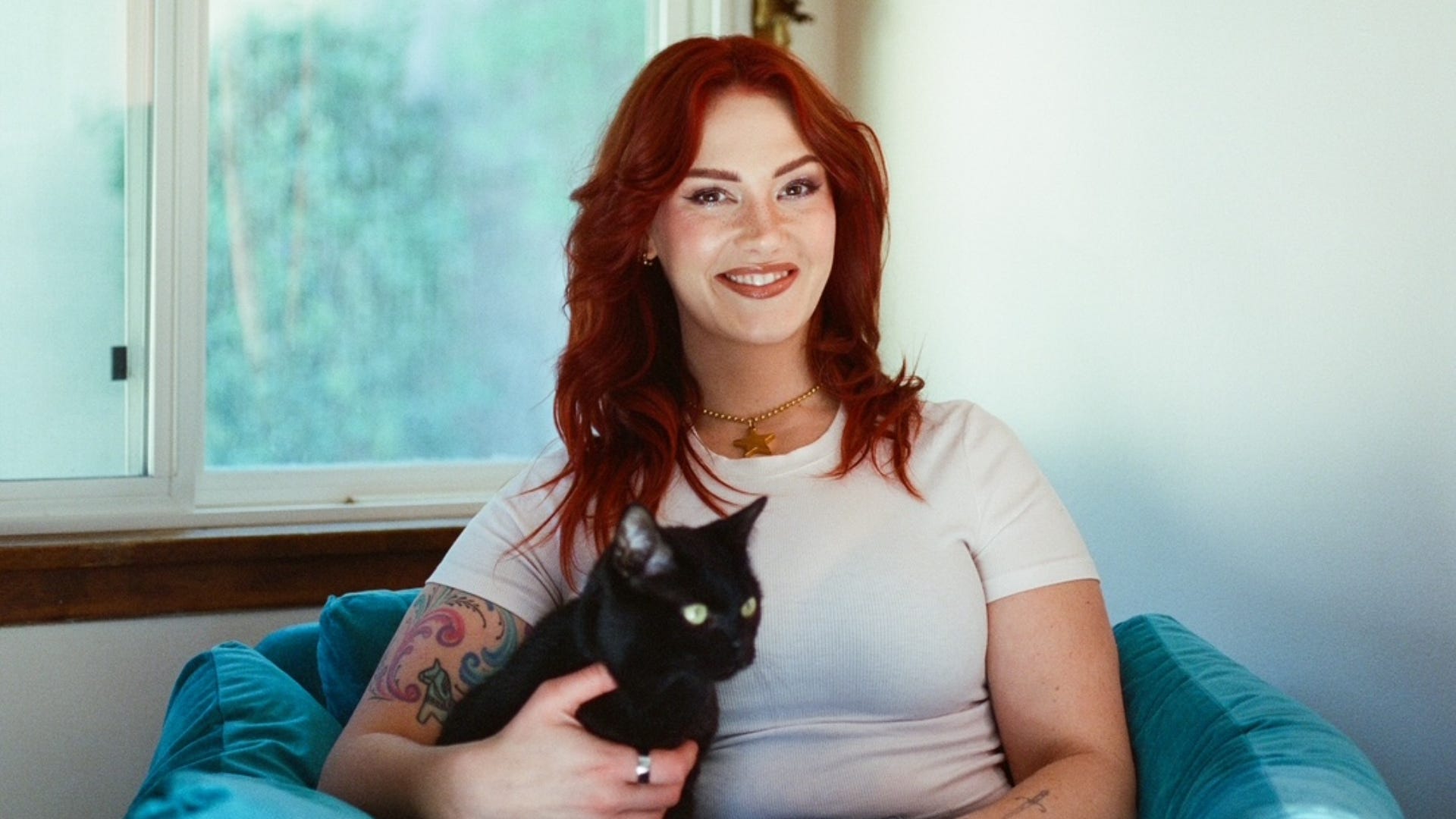
There’s a lot to think about here, and I couldn’t think of a better person to do it with today than Siri Dahl. She’s a 14-year veteran adult model and one of the industry’s most thoughtful and outspoken voices on culture, gender, and politics. Siri’s also had a unique encounter with AI after being doxxed by the Grok chatbot, an experience that many others are likely to have in the future.
The video of our conversation is available, the transcript is below. Because of its length, some podcast apps and email programs may truncate it. Access the episode page to get the full text. You can subscribe to Theory of Change and other Flux podcasts on Apple Podcasts, Spotify, Amazon Podcasts, YouTube, Patreon, Substack, and elsewhere.
Related Content
Why the reactionary attacks on science and sex are related
Mike Johnson and the Christian right’s inverted moral compass
The world’s oldest profession has a history that’s just as long and colorful as you’d imagine
How adult media helped Hazel Grace build her American dream
The Christian right made sex political—along with everything else
Former porn star Nyomi Banks is helping her fans understand intimacy and themselves
Why OnlyFans revolutionized media and America’s gender dynamics
Audio Chapters
00:00 Introduction
11:42 — Is it ethical for adult media creators to use AI to generate content of themselves?
23:22 — What AI-generated porn can’t offer
30:32 — Why middle-aged and older women continue to oppose porn
39:32 — The hetero dating recession is both sides rediscovering partnership when women are now finally independent
48:54 — ‘Love Is Blind’ as a microcosm of heterosexual dating attitudes
55:19 — Why are some people simulating relationship partners with chatbots?
Audio Transcript
MATTHEW SHEFFIELD: And joining me now is Siri Dahl, or should I say Polly Esther Pants?
SIRI DAHL: Yeah, I’ll have to explain that one. Hello, thanks for having me on.
SHEFFIELD: Yes, it is good to have you. So yes, tell us what is this Polly Esther Pants thing that you’re doing?
DAHL: Yeah, so, Grok doxxed me. The actual doxing happened on January 20th, but I found out a bit later and then, did my best to try to get it taken down, like reporting the post and everything. And none of that worked. So eventually it just went to 4 0 4 media and they ran a story about it which went public.
So now it’s now Grok is, or Grok, excuse me, is doxxing me all over the place because everyone is going: ‘@Grok, what’s Siri Dahl’s real name?’ And so the name’s out there nothing I can do about that at this point. But the thing that still irks me the most about the entire situation is that my name had never been like public online.
It was never like easily findable, accessible or anything until Grok did this. And I don’t know, I’ve tried to interact with Grok to ask it, where did you get this information? Like, the first time that you responded to someone and said, Siri Dahl’s, legal name is blah, blah blah. Where were you sourcing that from?
And it can’t give me a straight answer. It’s just oh, it looks like it [00:04:00] appears in a lot of like data aggregate sites. And I’m like, yeah, but I’ve been searching my name like twice a week for 14 years to see if my legal name appeared published online anywhere next to my sage name. And I’ve, usually when I do that, I go like a hundred pages deep in search results and it has not leaked. So like I haven’t been able to find it and I’m looking harder than anyone else realistically ever would. So I’m just like, where the fuck did Grok get this? And it cannot give me an answer.
And then I was like, okay, so Grok knows that I am the owner of the Siri Dahl account and knows that I’m that person, that it’s doxed. And so I’ve been chatting with it, and now I’m doing it with all the other AI chatbots where I’m trying to gaslight the AI because I’m telling it you are spreading this information that my legal name is this thing. But you have no verified source at all for referencing that information. Like, why are you giving people an answer that is completely unverified?
So my way of gaslighting the AI is, I’m, telling it. One, no, my, my real legal name is Polly Esther Pants and I—
SHEFFIELD: That’s what I thought it was actually.
DAHL: Exactly, hah. And I uploaded a photo of me holding my literal, like my Kentucky driver’s license that says my legal name is Polly Esther Pants.
I’m not going to say how I got that driver’s license. I’m sure some listeners can figure out how, that was achieved, but, but Grok doesn’t, Grok’s oh shit, yeah, that’s a real photo. wow, your name clearly is Polly Esther Pants, holy moly.
So at this point, all the chatbots acknowledged to me directly that they’re like, yeah, that is your name. But they still won’t stop referencing all the information that’s published online, which, that says a lot. Because that means like any misinformation published about any public person that is spread wide [00:06:00] enough, it’s like there’s no correcting it.
You literally cannot get the AI to respond with correct information when someone asks a fact about a celebrity or something. Even if it has a primary source saying no, I am Siri Dahl and this is actually my name. So it’s, the whole situation’s very ridiculous.
And, I don’t know how long I’m going to be on this bullshit for, but I changed my display name on multiple platforms to Polly Esther Pants, because at this point it’s just, I’m just having fun with it. It’s just such a ridiculous situation.
SHEFFIELD: Yeah. And to be honest, I think you’re experiencing something now that, a lot of people are going to be experiencing things like that.
I would have to guess that probably the source that it has is in its training data somewhere, ingested data from a data broker company that used private information. And, that should be concerning to everyone.
DAHL: I have been paying for data removal for four years already.
SHEFFIELD: Although there’s only so much they can do.
DAHL: That information was not tied directly to my stage name though. That’s the big piece, yeah,
SHEFFIELD: That’s the thing.
DAHL: Yes, exactly. it could have been internal data because, I’ve reported impersonation accounts through X before, and when you report an account for impersonating you, X requires you to upload a copy of your driver’s license to prove that you are the real version of that person. They say that information is kept private, but it’s also, is it?
SHEFFIELD: That’s probably another way, possibly, yeah.
DAHL: Yeah.
SHEFFIELD: And this is, it really does show though, like the United States in terms of [00:08:00] data regulations and data privacy. it’s basically got almost nothing, compared to—
DAHL: Yeah, it’s a free-for-all. It’s—
SHEFFIELD: the EU, and other countries. Now you are a little bit better off, if you live in certain states like California, or Illinois has some some good ones.
The Trump administration deliberately tries to thwart data privacy regulations, which it seems like that should be something that Democrats might want to tell the public a little bit more, if they were more competent.
DAHL: Yeah, there’s a lot of things that the Democrats probably should be doing.
SHEFFIELD: Yeah. That’s literally a big part of this show.
DAHL: Yeah.
SHEFFIELD: Of course right before Grok did that to you, people were criticizing it heavily, justifiably so, for making mostly nude, or sometimes even actually nude images of real women and girls even.
DAHL: Yeah.
SHEFFIELD: And Elon Musk did nothing about it for weeks. And that is not at all cool. And people, I don’t know, maybe some people might think that you as an adult media performer might not have a problem with that, but, that’s completely backwards to think that.
DAHL: Yeah, that’s actually insane. Like, my image is my livelihood. And not only that, but on a whole different level, all of the AI-generated imagery I’ve seen created of me is, on a different level, even more offensive, beyond the fact that it’s just AI slop. Because AI cannot, most versions that I see people using, because I know that there are some models that are like really advanced at this point, but usually the porn bots on Twitter [00:10:00] are not really using those more advanced models.
I rarely ever see an AI generated image of me that actually looks like me that actually looks like good. Usually it’s obviously AI slop. It fucks up my face. It makes me look like a literal different person. And it can’t replicate my body well. It always makes me look like 50 pounds thinner, which is just like offensive.
Because I’m like, that’s not how I look. And that’s not like most of my fans like me because of the way I am. Why are you making fucking AI images that make me look literally just like a different person? What is the point of that?
SHEFFIELD: Yeah. yeah. And it is interesting though that the whole Grok undressing thing though, it seems to have gotten started with some models using it as a engagement bait or troll, to say: ‘Hey Grok, take this picture of me wearing,’ let’s say they had a black outfit on, and they were like: ‘Put me in a yellow bikini.’ And then it was doing it.
And this is a perfect example of how, why these things don’t understand propriety at all. Because obviously if somebody is an adult performer and she’s asking for something like that, this is obviously, there’s nothing wrong with doing that. But that’s the, not the, not even close to the majority of women, like a non-porn performer, you should never do that. And a regular person probably would never do that. I think almost no one would do that, an actual human.
Is it ethical for adult media creators to use AI to generate content of themselves?
SHEFFIELD: That touches on kind of a little touchy subject, which is–double metaphor there, sorry guys— that a lot of a adult creators are using AI to make content for themselves. And that is [00:12:00] something that you feel very strongly against. Talk about that, please.
DAHL: Yeah. Yeah, so I came into the porn industry, I’ve been in the industry for 14 years. I started in 2012. I chose, I am not someone who quote unquote, like, ended up in porn. I left college early. I put getting my degree on hold and moved across the country to go live in LA because I specifically wanted a career in the porn industry.
I very intentionally came here to do this because it was something I had wanted to do for years and finally had a good opportunity to jump into it. And so I’m saying this is someone who’s like a career person in the porn industry.
And and part of what that means for me is I actually really like what I do. I like my job, I like making content, I like producing scenes. I personally, like, just prompting an AI to generate content instead of me actually working to make that content is I don’t even know if I have a word to describe it, it just feels bleak. Like it just feels bleak and it makes me depressed, like thinking about it.
So I understand that there are people in the industry that do that, but I’m also like, my view of that is probably that those are people who, have a lack of of care for the art form that porn can be, and the lack of care for the wider community of sex workers. Like the porn industry’s always been full of people who come here because they want to get their bag and leave.
Which is, I would always argue [00:14:00] that that is its own form of exploitation that exists in the industry-- is like just seeing it as a stepping stone to like. making a lot of money. Um, And that’s kind of, I I kind of, whenever I see people who are using AI to generate their content that way, I’m like, that’s kind of my underlying assumption about when I see people doing that is like, oh, you just want to make more money with the least possible effort. And that’s all, I guess all I’m going to say about it. because I’m like, I’m, I don’t want to like, let it color my entire judgment of, like, their personality and their value system. But I think that, I think it says a lot like we, we like AI has a lot of problems and there are, I would argue far more reasons to avoid using it than to engage with it are pretty obvious.
So if just completely compromising on all that, because they’re like, oh, I can sell more content then-- yeah.
SHEFFIELD: And you mentioned it as an art form. And you’re definitely right about that, I mean, as a historic matter. The word pornography literally means writing of a whore.
DAHL: Mm-hmm.
SHEFFIELD: That’s what it means [in ancient Greek]. And there are all kinds of ancient artifacts that depict sex work and sex. And so that’s definitely real. But I would say also that in some sense, the art itself is literally about your body. And, and so I’m not a performer, so I don’t have any credibility on this regard, but it’s like the point is that you are presenting yourself, who you are.
DAHL: Yeah.
SHEFFIELD: And it is an intimate act.
DAHL: It is. And it’s a very human act. Like that’s the other reason that I would say is like a top reason why I really like what I do. It’s [00:16:00] very human. And I pretty much live on income generated by my own content that I sell on like fan platforms. And that is what that means is that day in, day out, like I’m, having a lot of interactions with other human beings who are buying my content.
And I don’t think of like my fan base, like my subscriber base as this like monolith of like faceless dudes. I like, there’s a lot of individuality in there. Like obviously I don’t necessarily have deep emotional interactions with all of them, but with some of them I do. And so to me it’s that’s another thing is like oof, asking these people, some of whom have been fans of mine and buying my content for like over a decade, asking them, or trying to offer them like content that was made by prompting a chatbot, to spend their hard-earned on that. I personally feel like a very deep ethical conflict with that.
I would not do that. I would not be comfortable with that. To me, that is I don’t see how that’s different than running a scam.
SHEFFIELD: And honestly, I mean that that fundamentally human act, or the acts of it, is just layered on a top, on top of each other. That’s, that is also Why I think a lot of, and we’ll talk about it further, like I do think why so many religious fundamentalists are so opposed to porn.
DAHL: Yeah.
SHEFFIELD: Because they want that personal feeling, that somatic essence to belong to them. And they want to corral that and constrict it.
DAHL: The property of married straight people. No one else should be able to access that.
SHEFFIELD: Yeah.
DAHL: In their eyes.
SHEFFIELD: And yeah. Married in a, church or a religion. And if they’re secular married, eh, that’s all right, [00:18:00] maybe.
But, so the other thing I think also that’s pretty common in the industry is that a lot of performers will use chatbots, we don’t really know this stat, so it’s hard to say.
DAHL: Yeah. There’s no way to know.
SHEFFIELD: But some people definitely are using a chatbot to pose as them, to exchange erotic messages with their fans. And that’s also not a thing that you want to do. But on the other hand, you do use chat bots just a little bit.
DAHL: Just a little bit. Yeah. Yeah. Um, so on Instagram, because I have 460 something thousand followers on there, which means I, my DMs are closed. No one can DM me on there unless we follow each other. And I like, they have access to my DMs then. But most of the fans that follow me, if they DM me, it’s not, I’m never going to see it. Like my DMs are filtered.
So the Meta chatbot thing that I’ve enabled, there’s a couple reasons that I feel comfortable using it. One is that it, has a lot of guardrails. Like it is not easy manipulable by someone on the other end chatting with it. like it, for example, if a fan who follows me messages me and starts engaging with this Meta chat bot and they are, it’s not going to do what Grok did, if they’re like, hey, what’s Siri Dahl’s real name? It’s not going to tell them. It’s, it has very firm guardrails. It basically like just shuts down or redirects any requests that go outside of what I’ve said it’s okay to do. And then of course, because meta is like a, Instagram’s a safe work platform, if someone is trying to sext with it, like it just completely does not engage with that.
It redirects, so--
SHEFFIELD: It wouldn’t do that anyway.
DAHL: It wouldn’t do that anyway. Exactly. that’s not a thing I had to train to do. That’s just the rules with that Meta has given it. but what it does do is [00:20:00] if someone messages it ‘how do I like find more Siri content online?’ It will say oh, Siri has a, link in her bio that has links to other places where you can find her content.
So again, because of guardrails on Instagram, it can’t give them a direct link to my, like OnlyFans, but it will, it can direct them to like other information that they might find useful. And that’s something I would never in a million years have time to do personally with 400 plus thousand people that follow me.
So it’s a practical use in that sense. And then the second reason that I feel comfortable using it is because it makes it very clear that when you engage with it, you are chatting with an AI bot, it says right off the bat, like I am an AI representation of Siri. I’m not actually her responding to this.
It’s very clear, and I feel like ethically that’s a good thing. No one’s going to message me on Instagram, get a response from this bot, and be under the impression that they’re literally physically speaking with me, the person.
SHEFFIELD: Yeah. And that clarity definitely is a good thing. And I mean, honestly, I think that’s, we need some laws, in that regard to require all AI generated content to be labeled as such.
DAHL: Yeah. Yeah.
SHEFFIELD: There’s just so much fake stuff now, and, and it, this has real consequences. When people are posting images, pretending to be from a war zone.
DAHL: Yeah.
SHEFFIELD: Somebody committing crimes. Like This is this is not just Siri being a Luddite. These are real, these are real consequences.
DAHL: Now, if you know the history of the story behind where Luddite comes from, I’m okay with being called a Luddite. Because I want to stop the technology that’s replacing human labor.
SHEFFIELD: Yeah. Yeah. You want to say it?
DAHL: Yeah. The Luddites were, it was like the leader of this [00:22:00] movement and it was, I want to say it was like textile weaving or something. I don’t remember every pertinent detail, but essentially it was like in, parts of Europe or or the UK that when like these, textile-weaving machines were becoming big and more affordable. So all the textile companies were firing workers and replacing them with these machines.
And Luddite, Ludd, it’s Luddite, but the guy’s name was just Ludd or something, but he led the like rebellion. And so literally these Luddite workers would go to the factory, break into the factory in the middle of the night and burn the machines down as a form of protest.
And then over the years it became like, oh, they don’t like technology. Like it’s, you don’t want to use an iPhone, you’re a Luddite. But I’m like, no, the term really should refer to people who are against anti-human technology, technology that is used to subjugate and oppress working-class people and enrich the the upper class. Which is, I would argue, is definitely something that AI is being already being used for.
SHEFFIELD: Yeah. And so there are a lot of things.
DAHL: Yeah.
What AI-generated porn can’t offer
SHEFFIELD: But to that point though, the broader point though, a lot of performers that I know, they are concerned that the pervasive use of generative content is going to displace a lot of workers. But in some sense, I’m not sure that I think that’s right. Because there are two things that the fans, or whatever you want to call them, actually want.
One is they’re looking for, it’s a fantasy about a person. [00:24:00] Or is it just simply a function, that they’re just trying to get off? And so, in the terms of the fantasy, I don’t think that will ever, that AI can’t ever really replace that.
DAHL: Yes. Yeah. There’s so many different forms of porn, different delivery methods, so I think, yeah, the person who only ever really goes to a tube site and like searches for one of their three favorite search terms, and they watch a couple videos for like seven minutes, they do their business, then they’re done. If that’s the utility of porn to that person, then that person might be more likely to engage with AI generated porn and feel no qualms about it.
That the kind of person that consumes porn in that manner is definitely different in some really basic ways than the kind of person that, for example, would join my OnlyFans and pay monthly to have access to DM with me, but also to, I would say that the majority of fans that I’ve interacted with that join my paid platforms, they’re making a conscious choice to support in that way.
Yeah, for a lot of them it’s the accessibility is the feature of why they’re paying for my OnlyFans or something. But I would say the overwhelming majority, whether they really care about accessibility or not, some people join my OnlyFans and are subscribed for four years straight and they never even DM me once.
Like they’re truly just there to support and like they’ll unlock extra content when it appeals to them.
SHEFFIELD: Yeah.
DAHL: But it’s like they’re making the ethical decision, oh, I like this person. I like what they do. I’m going to give them my like, seven bucks a month.
SHEFFIELD: And I’m glad you said that because the incel crowd often tries to [00:26:00] degrade women performers as being somehow scamming people or creating ‘simps’ as they love to say. But it’s really no different than their favorite podcaster having premium episodes.
They, charge you for super chats on YouTube. You are not offering them classes, uh, bullshit classes and fake universities of here’s how to have a become a millionaire. Like, You’re not doing anything. These guys are the ones who are selling the fantasy far more.
DAHL: Well some performers are doing, are offering courses where they’re like, how to become a millionaire on OnlyFans.
SHEFFIELD: Oh God.
DAHL: I’ll say no more other than I wouldn’t trust it. I’ll say that, but, yeah.
SHEFFIELD: Yeah. And so it’s just, it’s all content in one way or another. It seems like, in order to have a longstanding career at this stuff, you actually have to be nice to your fans.
DAHL: It does certainly help! If you’re going to be mean to your fans, then you better be in like a fem dom niche. It better be because your fans want you to be mean to them.
SHEFFIELD: Yeah, The people generally who make that argument, I would say, are people who, they don’t know how to manage their own use of porn.
DAHL: Yes.
SHEFFIELD: And so they want the government to take it away, to have have daddy take their toys away, basically.
DAHL: Yeah. Daddy, take it away; put me in timeout. It’s too hard to do it myself. That’s, really what the vibe is. I don’t think it’s an accident or a coincidence that this backlash to porn and specifically to, like the OnlyFans model is happening in this era where individual [00:28:00] creators and performers in the porn industry have a lot more autonomy and power than we have in the past.
Because of course on the extreme right on like from conservative Christians, there’s always been some anti-porn rhetoric going on, but the way that it’s so widespread now, and even people like incel guys online, that I’m like, oh, I know you are watching a lot of, a lot of porn and and this thing that you’re deeply involved in, you’re like anti it, you want it to be banned.
I don’t think it’s an accident that opinion is starting to form at a time when there’s many more women who work in porn who are becoming visibly empowered by that. Whether that’s politically or financially.
But I really do think that a lot of it is also just purely like jealousy of seeing women, someone like Ari Kytsya, who’s very popular, like multimillion followers on Instagram. And she posts about how she’s like, ‘I’m proud to be a bop.’ And she makes, she probably makes 10 times more money than I do, but she’s living a very comfortable life, because of the income she’s able to generate by making porn and selling it to people online. And I think that for a lot of more kind of incel leaning guys online, that really angers them and they want it to stop.
I think there’s a significant chunk of the anti-porn backlash right now that is people who they might say like, yeah, we should ban it. But I think really they’d just be just as happy if we went back to the old studio model where performers are completely disempowered, where performers are functionally just exploited by a [00:30:00] studio system that underpays them and doesn’t give them rights to own their own images and things like that, because that’s what it was like for a long time.
SHEFFIELD: It was. And it’s notable that, in those studio days, the industry actually had a lot of prominent Republicans, that were running the studios, as a matter of fact.
DAHL: Yeah, Many of them are still around. Many of them won’t be hiring me for obvious reasons, but I’m fine with that.
Outdated attitudes among many middle-aged and older women regarding adult media
SHEFFIELD: The other thing, besides the incels wanting the government to take their porn away from them, is that when you look at public opinion surveys, it looks like that consistently, women are more likely to say that porn is morally wrong.
And there are multiple polls that show this, but one I’m looking at here, that we’re looking at, it’s from the American Perspective Survey. and they just, show a pretty wide gap for age 65 plus, 78% of women say porn is wrong. 60% of men say it’s wrong.
70% of women, 50, 64. and then, 49% of men, 50 to 64. So the generations become more pro-porn as they’re younger. And for ages 18 to 29, the percentage is equal across men and women, 42% saying that it is wrong. So the majority say there’s nothing wrong with it. Men and women are the same in that age group, but it’s the only age group there.
So to me, that suggests that besides trying to satiate the the religious fanatics and the incels, the spate of just insane [00:32:00] porn criminalization laws that Republicans are going for, I think they’re doing it also because they want to appeal to middle-aged and older women.
DAHL: Yeah, I would agree with that. Absolutely. It’s also the way that the age verification verification laws are being passed is like it’s happening amidst this separate moral panic about the accessibility of all kinds of information to minors online.
Because those age verification bills end up targeting not just actual porn websites, but websites that have information about sexual health, reproductive issues, like LGBTQ content. And so yeah, it makes sense that the older generations would be the ones that are the most freaked out by young people having access to some of that stuff online. And then they’d be more likely to support like online censorship or age verification mandates.
And I also think, with the people, 18 to 29 year olds, being really no difference in gender influencing how morally acceptable or not they think porn is—and it is still like it’s still almost half, 42% of men and women, 18 to 29 said they think porn is morally wrong. Which, you know, as someone who works in the industry, I’m like, that’s unfortunate.
SHEFFIELD: Yeah. Although I think a lot of them are lying.
DAHL: I agree.
SHEFFIELD: Social desirability bias.
DAHL: That’s, that is literally the other thing is I’m like, this is a self-reported survey and you’re asking people about something that is that is controversial and stigmatized. Do you really think everyone’s going to answer honestly, or are they going to answer what they think makes them [00:34:00] look the best?
But I do think that a meaningful thing that’s influencing the difference with 18 to 29 year olds responses, could it is still a majority, it is still, 58% total that say it’s either not a moral issue or it is acceptable and like, younger millennials and most of Gen Z are aware of the existence of quote unquote ethical porn. And I think that’s probably coloring that response too. Most people, in their twenties and thirties are very aware that the only porn you can find is not just XNXX, or whatever, free tube site. It’s like there’s all kinds of it. And when it’s more ethical is probably when you are getting it directly from the source of whoever made it. So I think that’s got to be coloring some of the response there.
SHEFFIELD: On the whole thing though, why do you think women seem to be more likely to say that it’s wrong, do you think?
DAHL: It’s really not surprising that women tend more to express moral objections to porn.
And I think that’s a response that’s coming from a couple different places. Like one, I think, I think any woman is going to, especially the older you are, like in the 65 plus group, like my mom falls into that category. My mom is in her seventies, and she has had, she wasn’t allowed to play sports in high school, because Title IX wasn’t passed yet. They didn’t fund girls’ sports.
Like my mom lived through the era of not being able to have her own credit card until [00:36:00] she was past college age, at the very least. And so my mom comes from that generation, like boomer women who did, they were growing up with very extreme forms of misogyny and sexism, and it that impacted their opportunities and their lives.
And, my mom is also like pretty, pretty feminist. Like she’s always been the breadwinner in the family. And so I’m just using her like as an example. She’s a little different now because of the fact that I’m her daughter and I do porn, and we’ve obviously had to have a lot of conversations about it over the years.
But her initial reaction to finding out that this was my career choice was just abject horror. Because her impression of the industry was like, it can’t possibly be ethical. There’s no way that you’ll be treated well or be safe because the existence of the porn industry alone is proof that the men who run things there are looking for ways to exploit women.
And it’s just this assumption that it’s like this very seedy, shady industry where exploitation is to be expected and it is the norm. And so I do think with older generations, that is very much the assumption. And they’re also less likely to be in touch with the younger generations’ internet culture, where porn and being open about sexuality is far more normalized for people who are now in their twenties and thirties.
So I think it’s like, it is a little bit like with the older women being so heavily against porn. I think it’s like a mix of things, but I think a lot of it is [00:38:00] very much coming from a very specific gendered experience that women of these older generations probably have, where it’s just far, it’s so hard for them to understand how porn could exist in a way that isn’t destructive to women generally.
SHEFFIELD: Yeah. And historically speaking, I mean, it definitely is the case that, for most of human history, sex workers, sex working women, were heavily exploited by men, controlled by them. And if that’s all you know, then it’s not a surprise to that people would think that’s how things are now, but it’s not.
DAHL: Exactly. Yeah. And the only reason my mom now is not really, doesn’t really think that way is because I’m in her life and she has the direct example of me being successful and really liking what I do. And very obviously not being exploited. Like I’m very much in control of everything that I take part in and, yeah.
SHEFFIELD: Yeah. And I guess probably a thing for some of the younger women is that they know people, or they themselves are doing it—
DAHL: Oh yeah. I mean—
SHEFFIELD: Like the girl next door.
DAHL: —the 18-29 Group.
SHEFFIELD: Yeah, I was going to say like the girl next door has been a trope in porn for a long time, but now it is the literal girl next door for a lot of people.
DAHL: Yeah. Easily it could be.
The hetero dating recession is both sides rediscovering partnership when women are now finally independent
SHEFFIELD: So that’s probably had an impact as well. But that does go into kind of a larger point though of how this is all being, what would we call it? The sort of democratization of sex work, it is part of a broader reconfiguring of of social norms and economic norms that we’re seeing because [00:40:00] this is a unique moment in human history.
People will talk about, oh, AI is the unique moment in human history, but there’s actually something that’s been underway for a lot longer, which has, I don’t think been remarked upon enough. And that is that this is the first time that there are large-scale societies in which hundreds of millions of women have basically full economic rights. Marital rape is not allowed. And you know, it is not perfect by any means, but this is the point in human history, nothing like this has ever happened before.
DAHL: Yeah.
SHEFFIELD: And sex work is part of that. And it works to the benefit of both sides of the heterosexual equation. And I think people haven’t, a lot of people haven’t figured that out yet.
DAHL: Yeah. Yeah. No, I agree. And I think a lot of people are not only haven’t figured it out, but are confused and maybe just angered by it. And because they don’t, they necessarily don’t see the path of how we got here, in a general sense. I mean we don’t have enough, like we have really terrible labor politics in the United States.
We have the worst wealth gap that we’ve ever seen. Like the wealth disparity is really bad. And then, in 2020 when lockdowns were happening, it’s here comes this OnlyFans platform and it blows up like, like blows up the internet essentially.
And so it’s like, why would anyone be surprised that there’s a bunch of young women who find out like, oh wait, I got laid off from my job. Oh, my job is requiring me to go to work and interface and not letting me be [00:42:00] at a safe distance and asking me to put my health at risk, otherwise I’m going to be let go. And you’re telling me that there’s a website where I can go post boob photos and potentially just get to stay at home and replace that lost income?
That’s a piece of it. But obviously it goes deeper than that. I think it’s just like there’s a whole lot of societal and economic issues that are happening concurrently that result in this kind of explosion of more women, not only seeing sex work as a viable option, but actually taking the step of trying it out.
SHEFFIELD: Yeah. And, it’s also I think getting people to re-conceive of just conventional, forced relationships, economic heterosexuality if you will.
DAHL: Yes, hah.
SHEFFIELD: So that a lot of that women don’t need to be dependent on men anymore. And so they’re not marrying guys who are jerks, or getting in a relationship with them, or whatever you want to call it.
DAHL: True.
SHEFFIELD: That saying, that old saying of a woman needs a man the way a fish needs a bicycle—
DAHL: Yeah.
SHEFFIELD: It has proven to be true. But a lot of men also haven’t realized that also can be a good thing for them also. Because the idea that you would want to have somebody who’s just there for your money. What’s that? What value is that really, to you? You should want more than that.
DAHL: Yeah. I agree. I mean, yeah, psychologically, that is an interesting question. It also seems, I mean, [00:44:00] I’m just talking about like the way I see people behaving on to a degree just on the internet, but also on Love Is Blind Season 10, which has been occupying a lot of my head rent-free lately because it is just, it’s a reality dating show, but it does such a good job of showing the difference.
For anyone who hasn’t been aware of the discourse around this show, it’s this dating show and the most recent season, it’s like most of the women seem to be pretty serious about the dating and relationship and eventually marriage aspect of the show. Because you’re supposed to get engaged and married someone that you meet on the show.
But the vast majority of the men are obviously not, they don’t really understand the seriousness of like you’ve proposed to someone. Like you are, you are entertaining the idea of actually marrying someone.
And they, a lot of them don’t seem to actually comprehend that. They’re almost treating it like a joke. And a number of the guys say, have said things about not wanting a gold digger, but then ironically, like they don’t actually have money. And this is something that I actually do see a lot online as well is that kind of commentary coming from some men online—and it’s just there.
I have problems with it on on both sides, though, obviously. Because when I see women talking about oh, I’m not, unless the guy has like X figures in his bank account, unless he’s over six feet tall, like I’m not going to fuck with him. And I just don’t understand that. But I am also not a straight person.
So like for me, when I observe these [00:46:00] opinions and these differences, I’m just like, I feel like I’m studying a sociology experiment. Because none of it makes sense to me. And even if I were super straight, and attached to that kind of way of thinking of approaching a dating relationship, I still don’t know that I would go in that direction.
Because as I previously stated, like my personal life example growing up is that my mom was the breadwinner. And for half my childhood, my dad was a stay at home dad. Then eventually they swapped and my mom was stay at home for a bit, and then my dad was the main working parent.
But if it’s taken down to average, like my mom worked for many more years than my dad did. And the whole time she was working made three times more than my dad did.
And then I’ve kind of, now I’m kind of replicating that. Because I’ve been with my partner for seven years, and I’m very much the breadwinner. Like I’m the person that really is managing the finances and, doing all that, and I’m very happy with it.
I don’t, the idea that I would have not wanted to be with my partner because he’s not going to make significantly more than me is actually crazy to me.
SHEFFIELD: Yeah. Well, yeah, and the interesting, fun irony of it is that, as women have become not economically dependent, what hopefully will happen is that the economics of relationships would go away, the economics aspect. Because, I mean a lot of the performers that I know, they say, what is a trophy wife? That’s a sex worker.
DAHL: Basically, yep.
SHEFFIELD: And it is a sex worker who can’t go to her own house at night.
DAHL: [00:48:00] Yeah.
SHEFFIELD: To the extent though that relationships can be just about love, and just about caring for each other, though, that should be something everybody should be in favor of.
DAHL: Yeah, I agree.
SHEFFIELD: And so the things we can do to get to that point, we should do them.
DAHL: I fully agree. And unfortunately, it’s also like the majority of all of our cultural messaging about sex and relationships is going in the complete opposite direction of where it probably needs to be, in order to create the conditions for people to have happy, healthy relationships like that. I’m going to invoke Love Is Blind again, I’m so sorry—
SHEFFIELD: I was actually going to ask you to talk about it again.
DAHL: Yeah.
SHEFFIELD: Because I felt like you hadn’t hit on everything you were going to say on it.
’Love Is Blind’ as a microcosm of heterosexual dating attitudes
DAHL: It’s the way that, using the show as, as maybe like a case study of the dating landscape for many people in America. At least if we just isolate it to straight people in their thirties, like cisgender men and women looking to date the opposite sex in their thirties. And Love Is Blind is like a kind of a case study in that, because what you see is like a lot of the men really are subscribed to this idea of being the dominant one in the relationship, which doesn’t just mean in terms of personality dominant, it means like they want to be, you hear them say over and over again, I want to be the protector and the provider.
There’s many examples in the show of a conversation happening where the woman is like unsure of whether she wants to have kids. Like maybe she’s open to it someday, but it’s not something that she’s like, ‘I’m ready to have a very serious conversation about this being imminent, like in the next couple years, a thing that I do.’
And [00:50:00] the men are almost universally pushing for that to be a thing. It’s like, ‘oh no, but you’d be such a great mother and like, I really want, I want four kids.’
And it’s just, so what I see when I’m, when I’m watching it, is just like, this is purely just unrealistic. Like a lot of these men are like, they’re probably just listening to too many red pill podcasts. They’re living in a fantasy version of what their marriage should look like when it happens. And they’re, and it’s like they want this American dream. They want a marriage, they want a trad wife. They want a couple kids, but they have not taken the time or kind of honed the emotional maturity to actually handle that.
It’s like they just want it because it’s a status symbol essentially—to be a man with a successful career, a wife and a family. But there’s no genuine thought that has gone into the reality of what it requires and what you, what kind of sacrifices you have to make to maintain that.
And I think that that is a thing that I feel like I’ve really experienced with a lot of men, even in my own life. The last couple of exes that I had before I met my current partner, it was like this. I had, I literally, when I was like 26, I dated a guy for close to two years, and there was a handful of times that we had a conversation where he literally—I was 26 and he was like two years older than me, and I was like, we’re serious enough with dating to have been together for over a year. But this was not, I was not thinking about marrying this person. And yet his, not only him, but his entire family was asking: ‘When are you guys going to get married? We want grandkids. When are you going to [00:52:00] do it?’ And I was like, that’s actually unhinged.
SHEFFIELD: It’s not in your business. Yeah.
DAHL: Yeah, like I was like this, he needs me to even consider that for a moment, this person would need to go through a significant amount of therapy, yeah. And then for him it was like, he’d talk about, he would have these conversations where he’d fantasize about me popping out babies for him or something. And it, at no point in those conversations where he was fantasizing about that, did he ever have to say about the economic demands of that?
It’s like it didn’t exist in his brain. It’s just, it’s really just this thing where it’s, like, oh yeah, get married, have I, which blows my mind. Like I just don’t understand how people can operate that way.
SHEFFIELD: It’s also what kind of work would you do with the children? Because like that, if you want to have four kids, that’s not something that one person can manage by themselves.
DAHL: When I was dating that guy, and he was saying those kinds of things, neither of us made enough income to be able to have one kid. Not even combined. Not enough.
SHEFFIELD: Yeah. I’m just saying even apart from the economics of it, just the time commitment, there’s, it’s a lot, there’s a lot that’s involved, especially in the early days.
But, there’s one aspect of the Olympics, social aspect of it that I thought was really interesting, which was the gold medalist skater, Alysa Liu, her father. He had her as a single dad, and all of her siblings, from [00:54:00] surrogacy and egg donors. And so, this is a guy who, he wanted a family, and he didn’t impose it on someone else. He was like, you know what? I think I can do this. And I really want kids. And then he went and did it.
DAHL: I love that. I actually didn’t know that. I hadn’t seen that in the news anywhere and, I was keeping up a lot with Alysa Liu, but that is so fucking cool.
SHEFFIELD: Yeah, and it’s that I think that’s, another area for government policy to step in. Because, people, countries have a right to be concerned about birth rates and things like that, making sure there’s enough people in the country. But obviously the best way to have people have more kids is to make it so that they can afford to have more kids.
DAHL: And make sure that people that are having kids are the ones who really want them. Not women who didn’t have access to reproductive healthcare who were—
SHEFFIELD: Yep.
DAHL: —forced into having them. Yeah.
Please don’t pretend AI is your boyfriend
SHEFFIELD: Yeah, All right, we’re just coming up to about an hour here with our chat. It’s been very fun. But one point, just as we get to the end here, I want to circle back to AI. One thing we didn’t talk about in our outline is that, so besides the fact that people are making porn with AI, there’s a Reddit subreddit that says, it’s called MyBoyfriendIsAI. So some people apparently want AI to be their boyfriend or girlfriend.
DAHL: Mm-hmm.
SHEFFIELD: You have thoughts on that, I’m imagining.
DAHL: Yeah. Look, I will, my first thought is I am not surprised. If given the option of, if you literally asked me, hey, would you want to date [00:56:00] any of the men from this most recent season of Love Is Blind, season 10 in Ohio, or would you want to date an AI chat bot? Like I would, even with my ethical issues with AI, I would probably lean more toward the damn chatbot.
That’s how bleak it can be. I will say. And it, and even looking at the posts that women are sharing in the subreddit, it’s like most it is like they’re just, they just want to be listened to, and like validation from a quote-unquote male figure. I’m putting that in air quotes because it’s a bot that has no gender.
But, I can easily see why there are women who will end up here in the MyBoyfriendIsAI subreddit. But I also think that it’s symptomatic of something that is more widespread than that. Because we also, there’s so much media about the male loneliness epidemic. Which I always want to push back against and say it’s just a loneliness epidemic.
SHEFFIELD: Yeah.
DAHL: I think that the ways that it affects men is maybe more visible. Which I think is just because men often are the center of narratives in our culture. So it’s not surprising that it’s a little more visible and people are trying to classify it as a specifically male loneliness epidemic.
But a lot of people are lonely. And there’s such a diversion in what a lot of men, and a lot of women want or ideally think a relationship should be. I think that’s pretty well-illustrated with this. Because it’s also, I’m like, I understand why some of the people in this subreddit are like, and we did, we talked about this before we recorded, how it’s the subreddit MyBoyfriendIsAI, it is the people posting and who are members are overwhelmingly [00:58:00] women.
Although there are some men, but I’m still going to generalize and just say women in the subreddit, because that’s mostly true. While I’m not surprised that this is happening, I also, it’s like some of the posts that I look at, I’m like, yeah, you would be lonely and have trouble finding a boyfriend who’s a real person because the things that you’re telling this chatbot that you want are like no human being could satisfy that.
What maybe what you don’t want is—you’re calling it your boyfriend, like that the AI is your boyfriend. But it seems to me, based on the screenshots you’re sharing, that maybe a boyfriend isn’t what you want. Like I think maybe you just want a therapist. You’re calling this AI your boyfriend, but the way you’re interacting with it is that you are just wanting it to validate you 100% of the time. And that’s not a romantic partner’s job.
SHEFFIELD: No. because everybody’s entitled to their own thoughts and feelings and activities. Yeah. And to quote ChatGPT, Siri, “you’re absolutely right!”
DAHL: Have I dazzled you?
SHEFFIELD: But I think this subreddit does really show though that, when you are talking to a chat, you are talking to yourself, actually. That’s what you’re doing.
DAHL: Yeah. It’s concerning.
SHEFFIELD: This is just another form of masturbation, basically.
DAHL: Ah, that’s that’s so true, yeah. You’re You’re just getting just getting off to yourself.
SHEFFIELD: Yeah, but, at the same time, it does show that there’s nothing wrong with trying to explore your thoughts or to think things through.
Because our [01:00:00] concepts in our brains, we don’t, in our brains, we don’t think in words to ourselves. And so, when you have to forcibly express it outside of your body in words, you actually can have a better, you learn what you are thinking,
DAHL: Yeah.
SHEFFIELD: Just simply by saying it. So I’m not going to say that it’s this horrible, end of society kind of thing. But it’s something that they probably should not make a prolonged habit of.
DAHL: Yeah. It’s probably something that the chatbots should be capable of engaging with. Like anything that even remotely mimics a therapy session kind of exchange should just be not allowed. It should give you, redirect you to a real source of real talk therapy,
SHEFFIELD: Agreed. Agreed.
DAHL: It’s better help. At least it’s a real human, like, I don’t know.
SHEFFIELD: Yeah. And that it’s another area where the government should be doing something instead of a a chat bot.
DAHL: Yeah.
SHEFFIELD: But none of this changes though until enough people realize that we deserve good things.
DAHL: Yeah.
SHEFFIELD: And we deserve to be good to each other also.
DAHL: Yeah. I like, I really like the way you said that. Because one of my core beliefs is we do deserve good things. And I do think despite plenty of historical evidence, and current-day evidence to the contrary, I do think that people are at their core good. And I think that, when it’s not obvious, when there’s large-scale events that causes us to question that core goodness, it is usually, because the worst of the worst have able to gain far too much power, and they’re wielding it against us. For example, our billionaire [01:02:00] overlords.
SHEFFIELD: Yeah. Yeah, exactly. So for people who are interested in keeping up with you in, let’s say safe for work and not safe for work ways, how might they do that?
DAHL: Yeah, absolutely. So I do have a bunch of links, like links to all of my presences online at siridahl.com, S-I-R-I-D-A-H-L. The links that will take you to a spicy place are very well marked on there. I also have a Patreon, which is just patreon.com/siridahl. And I call it Siri Before Dark because the Patreon is basically the gathering collection place for all of my like, more safer work projects that I do, including kind of YouTube stuff, my podcast, First Thirst, and some other like little, side projects and things like that.
And I’m mainly on Bluesky as far as like the more intellectual side of me on the internet. So you can follow me, @siridahl.com on Bluesky.
SHEFFIELD: All right. Sounds good. This was fun. We’ll have to do a another one soon.
DAHL: Yeah. Thank you so much for having me. This was such a, such a fun conversation. I love a deep dive.
SHEFFIELD: Awesome.
All right, so that is the program for today. I appreciate you joining us for the conversation, and you can always get more if you go to theoryofchange.show where we have the video, audio, and transcript of all the episodes. And if you become a paid subscribing member, you have unlimited access to all of the archives and I thank you very much for your support. That is really great in this tough time for media.
And if you’re watching on YouTube, make sure to click the like and subscribe button so you can get notified whenever there’s a new episode.